Some links on this site are affiliate links. If you buy through a marked affiliate link, we may earn a commission at no additional cost to you. This guide is researched editorial advice; purchases should be checked against current retailer terms. Read our disclosure.
Let the chair establish the feature
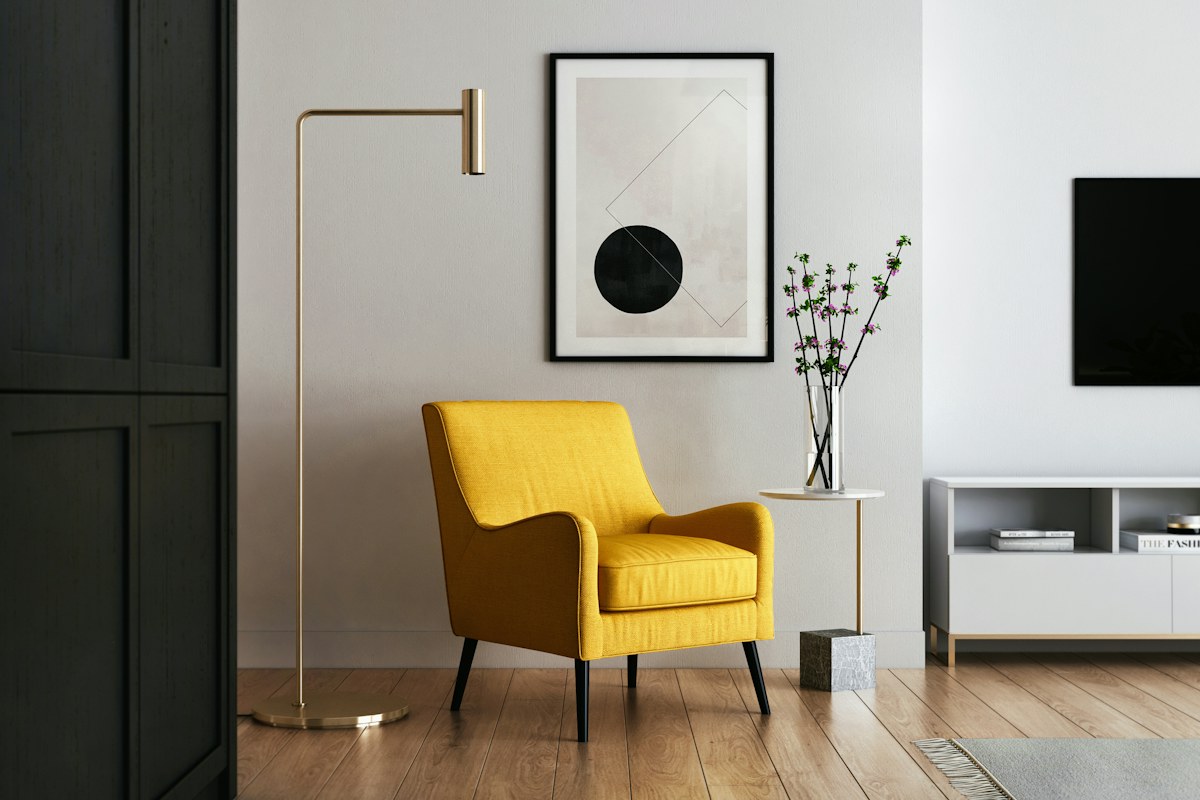
A colored or strongly shaped chair may already be the clearest detail in a corner. Begin by looking at it beside the retained wall, floor and nearby furniture. Do not assume it needs another equally strong object to make the choice feel deliberate.
Name what you enjoy about the chair: its color, outline or texture. That gives the comparison a center. If several different qualities are all described as needing support, the corner can quickly become a shopping list rather than a clear arrangement.
Choose one quiet retained partner
Try a plain suitable side surface, textile or nearby object that already belongs to the room. Its role is to let the chair remain readable, not to disappear completely. A quiet contrast can connect the corner without an exact match.
Keep the chair's real use in view. A decorative object should not occupy the only suitable surface needed for an ordinary activity, and textiles should leave the seat usable. Follow product and material requirements where placement or care matters.
Compare the broad shapes
A rounded chair and a simple rectangular table create a different group from two repeated curves. Look from the ordinary entrance rather than only at close-up finish details. The largest shapes often determine the corner's balance first.
If the group feels awkward, describe the actual relationship. The table may look visually heavy, a cushion may add too much pattern or the nearby artwork may compete. Change one optional element at a time before assuming the chair requires a complete matching set.
Keep color repetition optional
A plain companion can relate through warmth, darkness or texture instead of repeating the chair's exact shade. Compare the physical pieces under ordinary light. A small repeat elsewhere in the room may already supply enough connection.
Do not buy an accent cushion solely because it has the same color name. If it obscures the chair's own fabric or introduces another strong pattern, the apparent match may not improve the complete view. Try the quiet version first so the difference is clear.
Keep a simple record of the smallest usable group you prefer. When another object is considered later, compare its contribution with that reference rather than judging it alone. An accent chair can make a corner personal through one strong feature and one quieter partner. The remaining space can stay open enough to show both. A complete arrangement is one you understand and use, not necessarily one that repeats the accent on every surface or contains a companion purchase for every visible shape.
A practical comparison keeps the chair and wall unchanged while one optional cushion is set aside. If the chair’s outline becomes clearer, save that result. The corner may need a quieter partner rather than another object repeating the strongest color.
Related reading
A Reading Nook in a Room You Already Use, A Slow Weekend That Fits Real Life.
A question or correction? Contact the editorial desk.