Some links on this site are affiliate links. If you buy through a marked affiliate link, we may earn a commission at no additional cost to you. This guide is researched editorial advice; purchases should be checked against current retailer terms. Read our disclosure.
Decide what softer means to you
A bedroom described as soft may use pale colors, rounded shapes, quiet pattern or visible texture. Name the quality you actually want before adding more fabric. If the room already has several throws and cushions, another layer may increase visual activity rather than create calm.
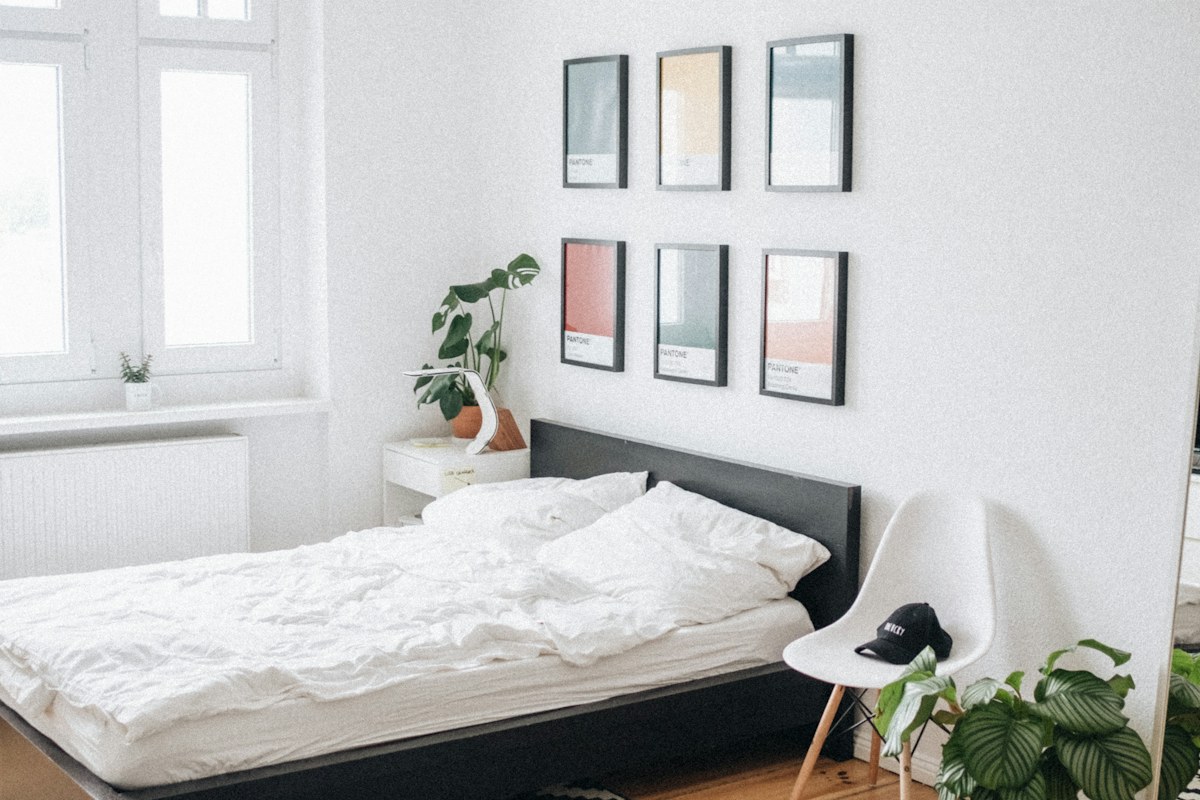
Begin with the retained bedding in its ordinary arrangement. Include the wall, frame, floor and curtains in the view. A close photograph of a folded throw can make texture seem more important than it appears across the actual bedroom.
Compare the broadest surfaces first
Look at the duvet or cover, then the pillows and curtains. Those larger areas determine much of the room's appearance. A small decorative cushion cannot reliably settle a disagreement between a large patterned bed and a strongly colored wall.
Try one suitable retained alternative while leaving the rest unchanged. A plain surface may quiet the group; a gentle texture may make a flat-looking arrangement more interesting. Describe the difference before deciding that you need a particular new material.
Reduce one layer as a comparison
Set aside an optional textile and look again from the doorway. The bed may appear softer when its outline is simpler and the remaining fabric has space to show. More objects do not automatically create a more inviting room.
Keep the bedding and seating needed for actual use available in appropriate places. Follow each textile's care and intended use rather than borrowing unsuitable fabric simply to fill the picture. The comparison should lead to an achievable everyday arrangement.
Check the ordinary fold
Use the way you actually make the bed, not a display requiring several carefully balanced layers. A turned-back edge can show useful contrast, but it may also expose two strong patterns at once. Compare the complete view before assuming the fold is essential.
Look again under your usual evening lamps. Texture and sheen can change their apparent strength when light comes from another direction. Use the physical room to settle subtle color questions; a phone image may make pale fabrics seem more alike than they are.
Keep the simplest textile group that provides the quality you named at the start. A note about a broad plain surface, one quiet texture or fewer competing folds is more useful than a general instruction to buy softer things. The retained bedroom can change through a modest edit, with appropriate bedding still doing its real job. The useful result is a room arrangement you can repeat without maintaining a photograph or collecting another matching layer whenever the bed looks unfinished.
Compare the bed from the doorway with one optional throw set aside. If the broad bedding surface becomes easier to see, note that simpler outline before adding another layer. The word soft can describe visual quiet as well as extra texture.
Related reading
A Morning Routine With Room to Breathe, A Reading Nook in a Room You Already Use.
A question or correction? Contact the editorial desk.