Some links on this site are affiliate links. If you buy through a marked affiliate link, we may earn a commission at no additional cost to you. This guide is researched editorial advice; purchases should be checked against current retailer terms. Read our disclosure.
Choose the colors already doing the work
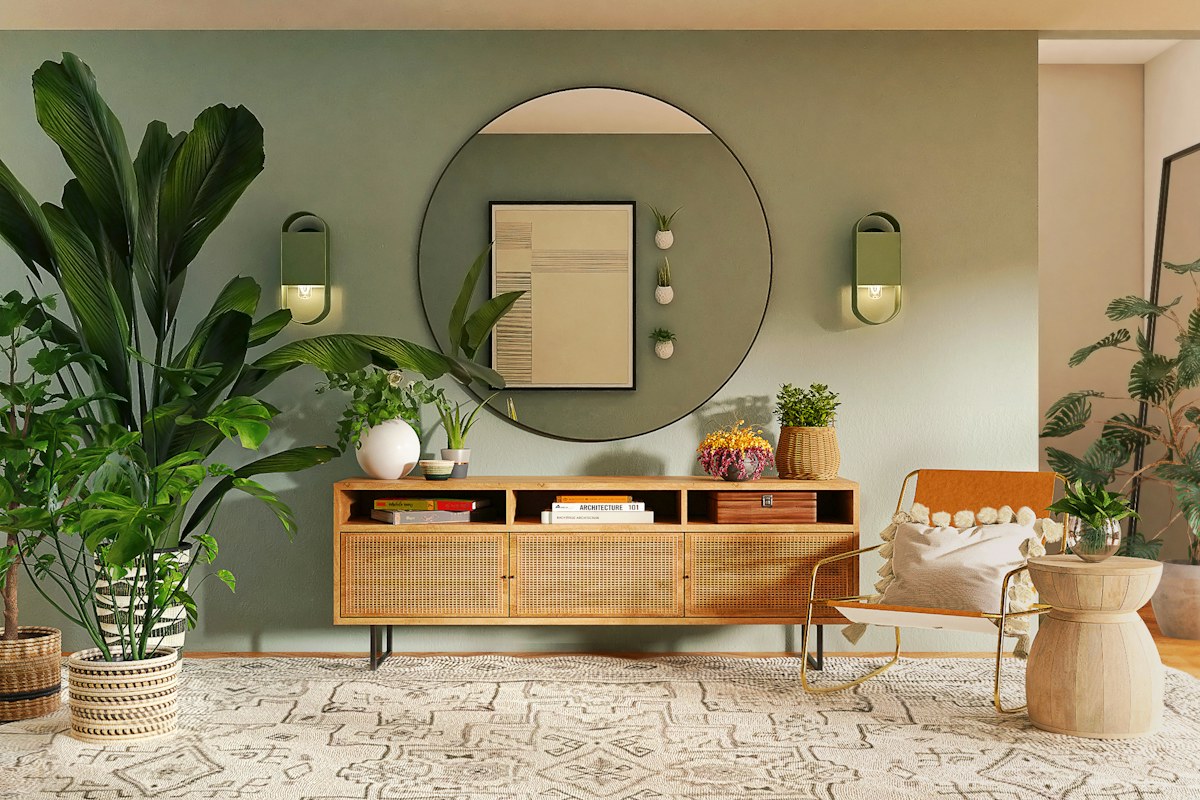
A console beneath a mirror can accumulate small objects until each one seems to need a companion. Instead of starting with a new accessory, identify two colors already prominent in the retained corner. A painted wall and the console's timber tone may be enough to establish the group.
Write those references in ordinary words, such as muted green and warm brown. The note is not an exact color specification. It simply keeps the large surfaces in the decision when a small ceramic object or picture frame catches your attention elsewhere.
Sort the visible objects by contribution
Set aside optional decoration briefly and return one piece at a time. Ask whether each object repeats one of the two references, adds a useful quieter surface or has a genuine everyday role. An object need not match to remain; the question is whether you understand what it contributes.
A pale bowl may give the timber a lighter boundary. A dark frame can define a picture without introducing another strong color. Conversely, several unrelated bright objects can make the corner less readable even if each is attractive on its own.
Use height without filling every gap
Compare one taller retained object with a lower group rather than lining everything up at the same height. Leave visible surface between them so the console's own material still participates. The empty area is part of the arrangement, not evidence that another purchase is missing.
Keep the actual furniture's load and stability requirements in view. Do not lean fragile objects or change the mirror installation to create a decorative trial. The small group should be suitable for its real setting as well as its appearance.
Look from the ordinary approach
Step back to the doorway or route from which you normally see the console. Small decorative patterns may disappear, leaving broad tones and outlines. If the arrangement only looks balanced from a close camera angle, decide whether that is the view that matters to your household.
Check once in daylight and once under the lamps you use. A reflective object can introduce a stronger highlight at night. Remove it temporarily if the two-color group suddenly feels busy; another matching object may not solve a reflection problem.
Keep a simple photograph of the quietest complete version. List the wall and furniture references, plus any small piece with a clear role. When an addition is considered later, compare it with that group rather than looking for an isolated match. Two retained colors can give a console enough coherence to stop collecting companions for every object, while leaving the corner personal and useful instead of turning it into a rigid coordinated set.
A useful dry edit starts with the wall, console and one lower object. Add the taller retained piece next. If the timber surface disappears beneath the group, remove a small item rather than buying a wider tray to keep everything together.
Related reading
Considered Gifts Without the Guesswork, A Slow Weekend That Fits Real Life.
A question or correction? Contact the editorial desk.