Some links on this site are affiliate links. If you buy through a marked affiliate link, we may earn a commission at no additional cost to you. This guide is researched editorial advice; purchases should be checked against current retailer terms. Read our disclosure.
Stand where you actually enter
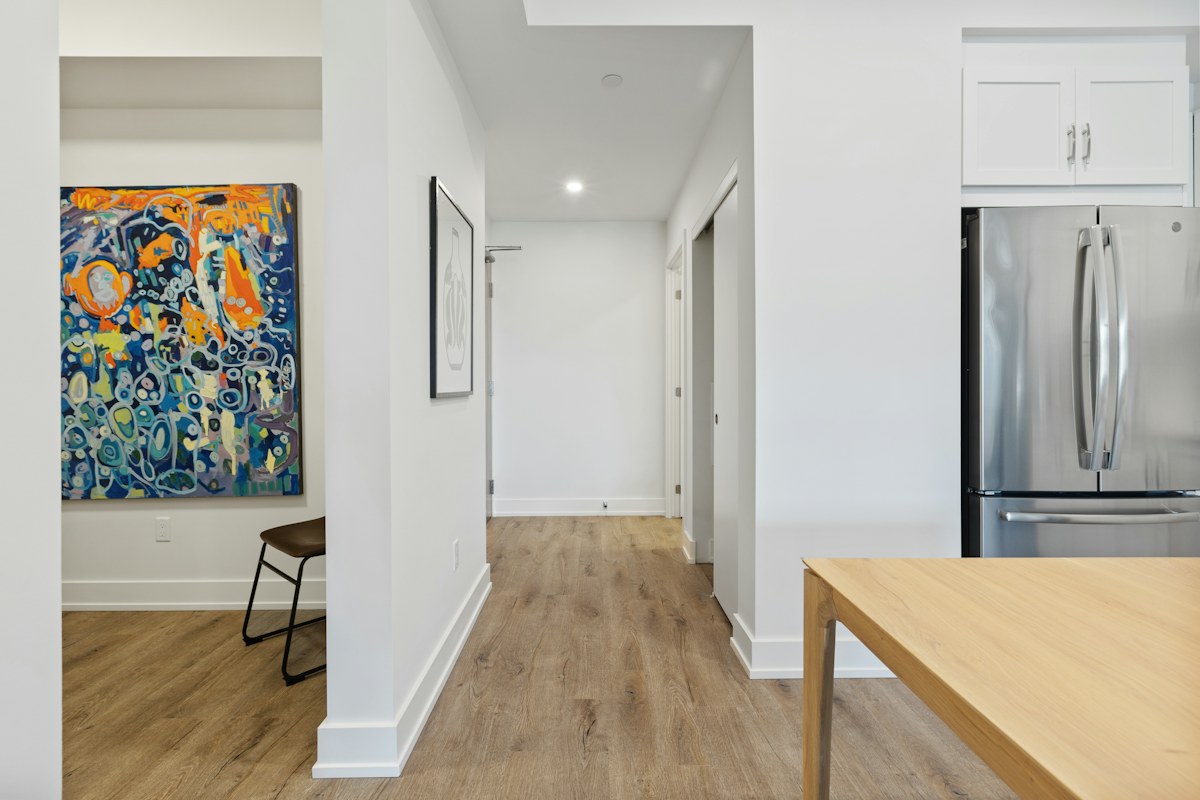
A room object can be attractive up close and contribute little to the view you see every day. Before buying it, stand at the ordinary doorway and notice the retained furniture, wall and floor visible beyond. Keep the door in its usual position.
This view is not the only one that matters, but it provides a useful first reference. A small object hidden behind furniture should not be expected to solve a visual question that appears mainly from the hall.
Name the question you want to answer
Describe the actual issue: a dark outline missing beside pale furniture, a color that feels isolated or a group that seems crowded. A vague desire for something to finish the room can lead to several purchases with no clear role.
Keep household function separate from appearance. If the need is a suitable place for daily belongings, define those contents and their requirements first. A decorative object does not answer a storage question merely because it looks well proportioned in the doorway.
Compare retained options
Look for an existing suitable piece that might clarify the view. Try one change at a time, keeping necessary equipment and routes in their appropriate arrangements. Do not move a useful chair out of service simply to make a smaller ornament visible.
If no retained option serves the role, record the actual dimensions and context before browsing. Include the wall and furniture references rather than a close crop of the empty gap. The purchase will join a room, not a blank product background.
Check the other ordinary position
Look from the seat or working place where you spend time in the room. A choice that improves the doorway view may add an awkward outline elsewhere. The group need not look identical from every angle, but its main views deserve comparison.
Use photographs to remember each version and return to the physical room for subtle color or scale judgments. A wide camera angle can exaggerate space, while exposure changes the apparent brightness of retained objects.
Keep a small decision note naming the role, the main viewpoint and any requirement still unresolved. If a candidate does not answer that role, leave it as an idea rather than promoting it to a household need. The doorway check is useful because it slows an isolated attraction long enough to reconnect it with the actual home. A new object can still be the right choice, but its place becomes more understandable. Sometimes the clearer result is a modest edit to what already stays, with no additional piece needed to complete the view.
Keep one reference from the ordinary approach and one from the main seat. If a candidate only improves an unusual camera angle, it has not yet answered the household’s real room question. Return to the defined role before shopping again.
Related reading
Considered Gifts Without the Guesswork, A Slow Weekend That Fits Real Life.
A question or correction? Contact the editorial desk.