Some links on this site are affiliate links. If you buy through a marked affiliate link, we may earn a commission at no additional cost to you. This guide is researched editorial advice; purchases should be checked against current retailer terms. Read our disclosure.
Begin with a suitable existing place
A plant can mark a corner without turning it into a collection. Start with a retained plant in a place that meets its actual care requirements. Decorative preference cannot establish the light, temperature or other conditions a specific plant needs, so keep reliable information separate from the visual trial.
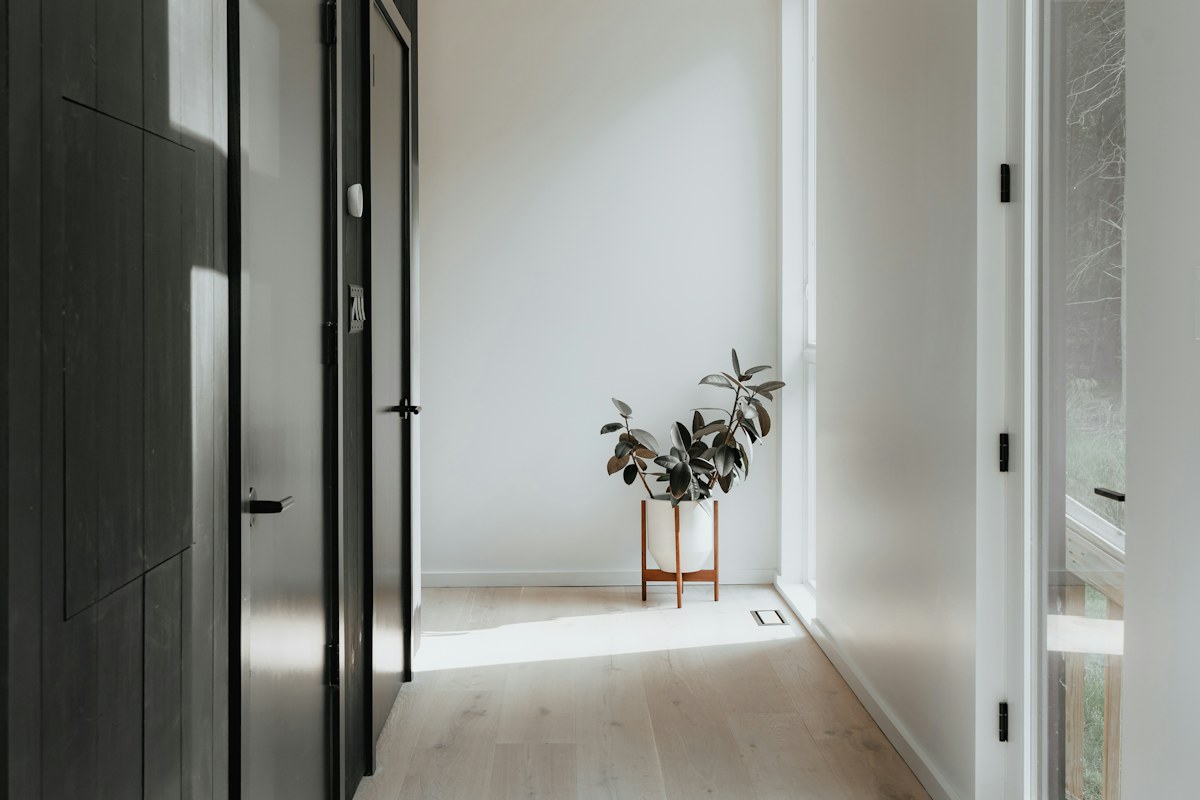
Look at the ordinary room approach. The foliage may supply enough shape even when the pot itself is quiet. An empty area around it can help that outline remain readable rather than signal that another object is missing.
Compare the background
A pale wall can reveal a dark leaf shape clearly, while a busy picture or patterned curtain creates another relationship. Name what sits behind the plant in your actual view. A product image on a blank background cannot explain the same effect at home.
Keep the retained furniture and door positions ordinary. A corner that looks appealing only after a chair is moved out of use may not serve the household. Routes, door movement and suitable support for the actual container remain part of the decision.
Choose one container relationship
Look at the pot's visible tone beside the wall and nearest furniture. It can repeat a warmth or provide a clear contrast without matching everything. If the pot disappears from the usual viewpoint, decide whether its decorative pattern matters enough to drive a purchase.
Any real container change still needs to suit the plant and product requirements. Do not repot or disturb a plant just to imitate a photographic proportion. The visual question can often be answered with the retained arrangement and a suitable reference sample.
Edit the neighboring objects
Set aside one optional ornament and look again. The plant may become more clearly the corner's feature once several small objects stop competing. You do not need another pot merely to create a balanced pair.
Check the view under ordinary daylight and evening lighting. Different shadows can change how the foliage reads. A photograph can preserve the arrangement, but the actual room tells you whether the corner remains quiet through the conditions you normally see.
Keep the smallest group that works: the suitable plant, its appropriate container and any retained surface genuinely needed. Save a note about the background and visible outline rather than a shopping list for a complete plant display. A corner can feel intentional through one clear living shape and enough room around it. The useful choice leaves the plant's real care needs intact, lets the household move normally and stops a modest decorative idea from becoming another collection to maintain.
Check whether the pot is visible from the normal approach. If foliage supplies almost all the outline, an elaborate container may add little to that view. Keep any actual container choice grounded in the plant’s suitable requirements before decorative detail.
Related reading
A Reading Nook in a Room You Already Use, A Slow Weekend That Fits Real Life.
A question or correction? Contact the editorial desk.