Some links on this site are affiliate links. If you buy through a marked affiliate link, we may earn a commission at no additional cost to you. This guide is researched editorial advice; purchases should be checked against current retailer terms. Read our disclosure.
Identify the shape that leads
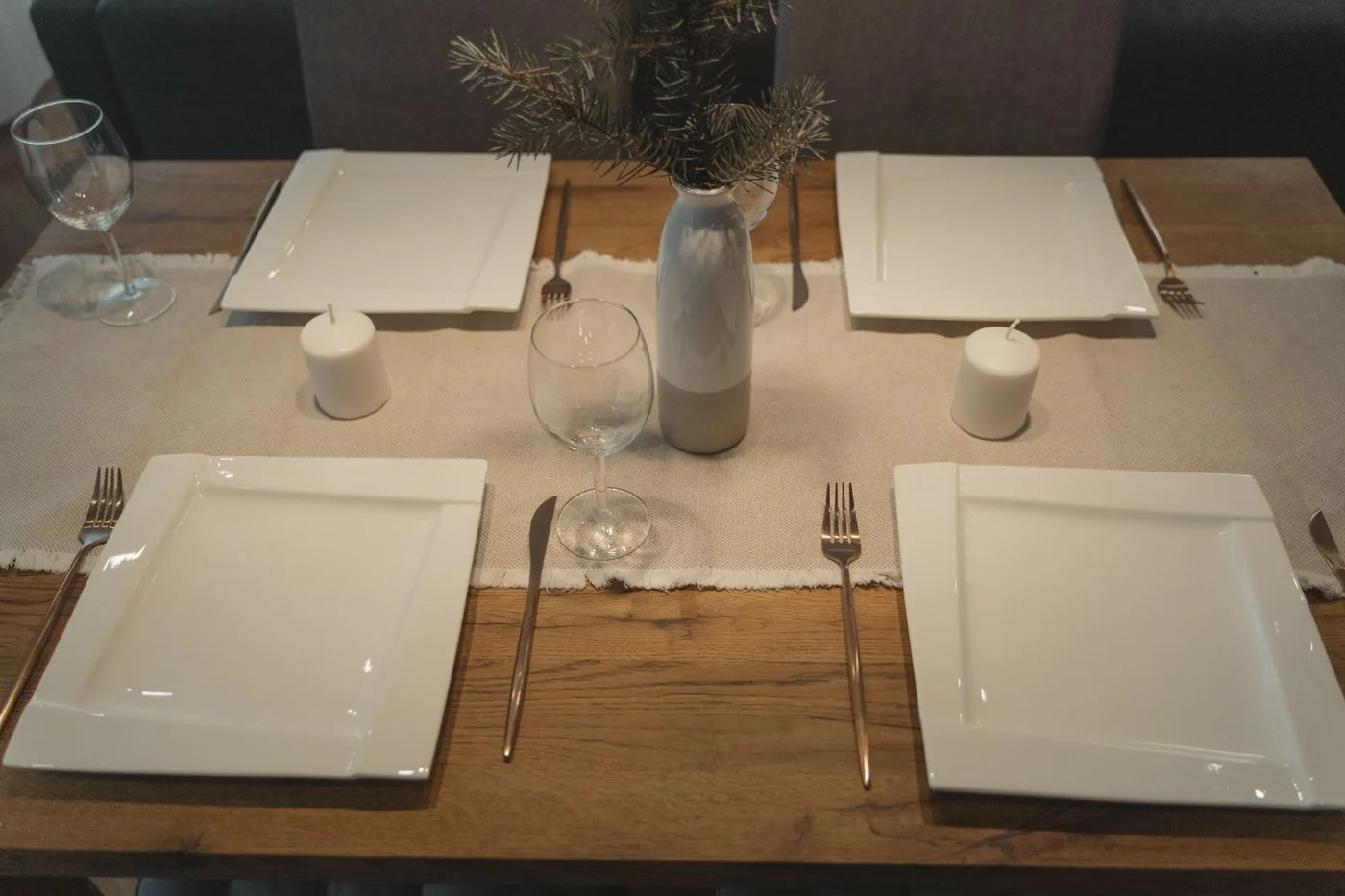
A square plate or a pronounced glass outline may already make a place setting distinctive. Begin with the retained equipment the meal needs and look from a seated position. Name the strongest shape before adding another decorative element beside it.
A plain napkin can support that feature by leaving a quiet surface. It does not need to become a second focal point to earn its place. Compare the simple version before assuming every table requires a patterned textile or a detailed ring.
Put the actual pale tones together
A white plate and cream cloth can look different when they meet, even if both seemed neutral alone. Compare them in the room's normal light and decide whether you enjoy the tonal variation. An exact match is not the only coherent choice.
Use the physical pieces or reliable samples for subtle decisions. A phone image can change pale colors and make two finishes appear closer than they are. Keep the actual product identities with the comparison if you are considering an addition.
Check texture and position
A plain cloth may still contain a visible weave or border. Place it in a simple ordinary position and look at the whole place. Fine texture can remain quiet while a broad band becomes another strong line beside the plate.
Choose a textile intended for its actual role and care routine. A fabric's attractive appearance does not establish food-contact suitability or maintenance requirements. Keep ready table linen distinct from items whose care remains unfinished.
Compare the elaborate version fairly
If you enjoy a decorative fold, try it with everything else unchanged. Does it clarify the group or cover the plate shape you selected to lead? The answer can differ between an occasional gathering and an ordinary dinner.
Keep retrieval straightforward. A guest should not need to dismantle several decorative pieces before using the setting. Any optional object needs a suitable role and a clear destination once removed, rather than becoming a loose item beside the food.
Save the simplest complete setting you prefer, naming the actual plate and textile. That gives a future accessory a reference beyond its isolated product image. A quiet napkin can be a deliberate choice that lets retained tableware keep its character. The meal still defines the necessary equipment and space, while decoration remains small enough to support the people using the table. Once the main shape is clear, an empty area or an uncomplicated fold does not mean the setting is unfinished or waiting for another purchase.
Try the cloth in its simplest usable position beside the plate, then compare the decorative fold with everything else unchanged. If the fold obscures the plate outline, the quiet version better supports the feature you chose to lead.
Related reading
Considered Gifts Without the Guesswork, A Slow Weekend That Fits Real Life.
A question or correction? Contact the editorial desk.