Some links on this site are affiliate links. If you buy through a marked affiliate link, we may earn a commission at no additional cost to you. This guide is researched editorial advice; purchases should be checked against current retailer terms. Read our disclosure.
Switch attention to the unlit shape
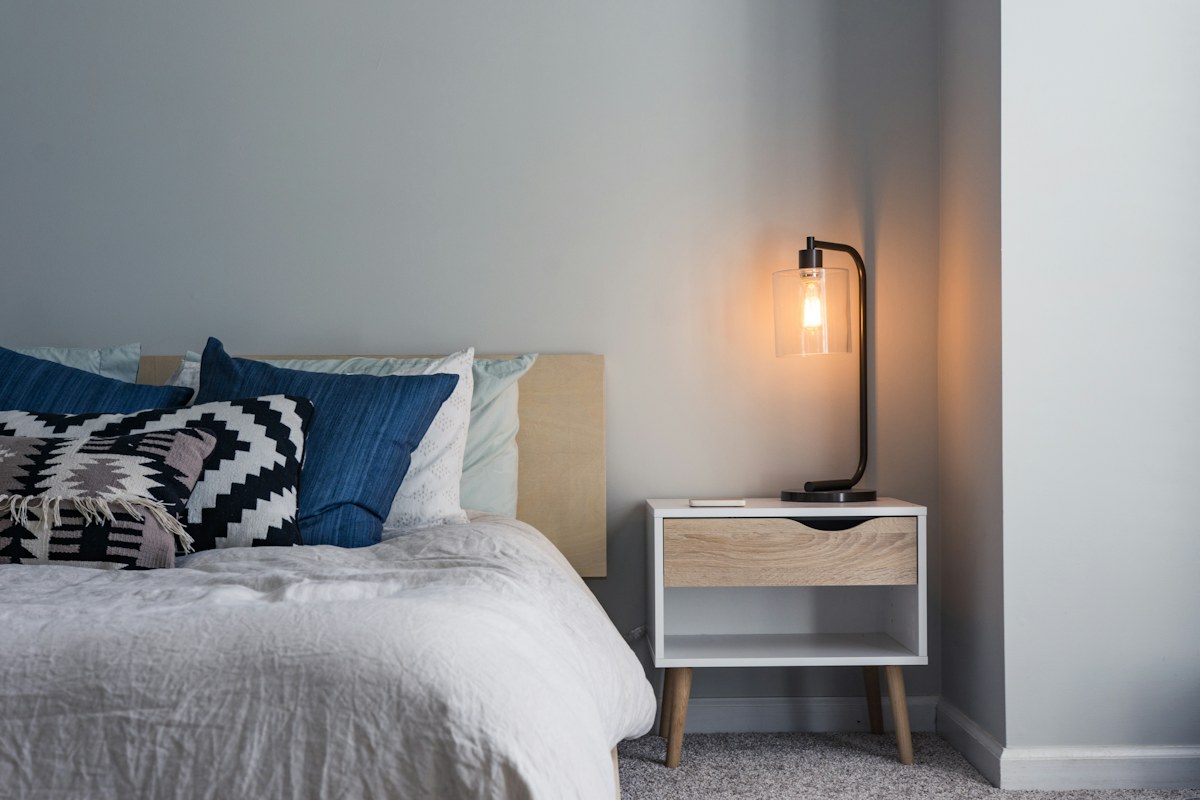
A lamp's glow can make its surrounding group look settled at night, while the shade and base remain visible during the day. Begin with that ordinary unlit view. Look from the entrance and identify which part of the lamp catches your attention first.
The shade may read as a broad pale shape, the stem as a dark line or the base as a small reflective object. These parts can contribute differently. You do not need every component to be equally prominent for the lamp to belong in the room.
Keep the table and wall in view
A lamp looks different beside a large headboard, low table or patterned wall. Include the retained surroundings instead of judging the equipment against a product photograph's blank background. The actual table surface and everyday objects should remain part of the group.
Follow the lamp's placement, electrical and compatibility requirements. A decorative comparison is not permission to cover equipment, improvise fittings or replace a shade without confirmed suitability. Keep those practical questions with reliable information for the actual product.
Compare tone and sheen
A cream shade may look warmer beside cool paint, while a metal base can reflect colors from nearby textiles. Check the physical room in daylight before ordering a supposedly matching accessory. A phone screen may alter pale tones and highlights.
If the group feels nearly right, name the disagreement. Perhaps the shade is visually broad, the base too reflective or the nearby picture introduces another strong shape. A precise description is more useful than a general wish for a softer corner.
Remove an optional detail
Set aside one decorative object from the table and look again. The lamp may already supply enough outline once unrelated pieces stop competing. Keep the objects actually needed in that spot, such as a current personal item, in suitable usable positions.
Then compare the ordinary evening view. A lamp that looks coherent by day still needs to serve its actual lighting role according to its design. The visual trial cannot establish brightness or suitability for every task, so assess those needs separately.
Save the quietest complete arrangement with the actual lamp identity where it matters. Use that reference before buying another ornament to balance the corner. A table lamp can be both useful equipment and a visible room object, with its daylight shape carrying part of the decorative work. Once you understand which component leads, the surrounding group may need fewer additions rather than a full furniture or color change to make the evening scene feel complete.
Compare the shade, stem and base separately, then return to the whole corner. If only the base creates a troublesome reflection, another ornament may multiply the highlight. Name that component before treating the entire lamp as the wrong color.
Related reading
A Reading Nook in a Room You Already Use, A Morning Routine With Room to Breathe.
A question or correction? Contact the editorial desk.