Some links on this site are affiliate links. If you buy through a marked affiliate link, we may earn a commission at no additional cost to you. This guide is researched editorial advice; purchases should be checked against current retailer terms. Read our disclosure.
Choose a patch that serves the kitchen
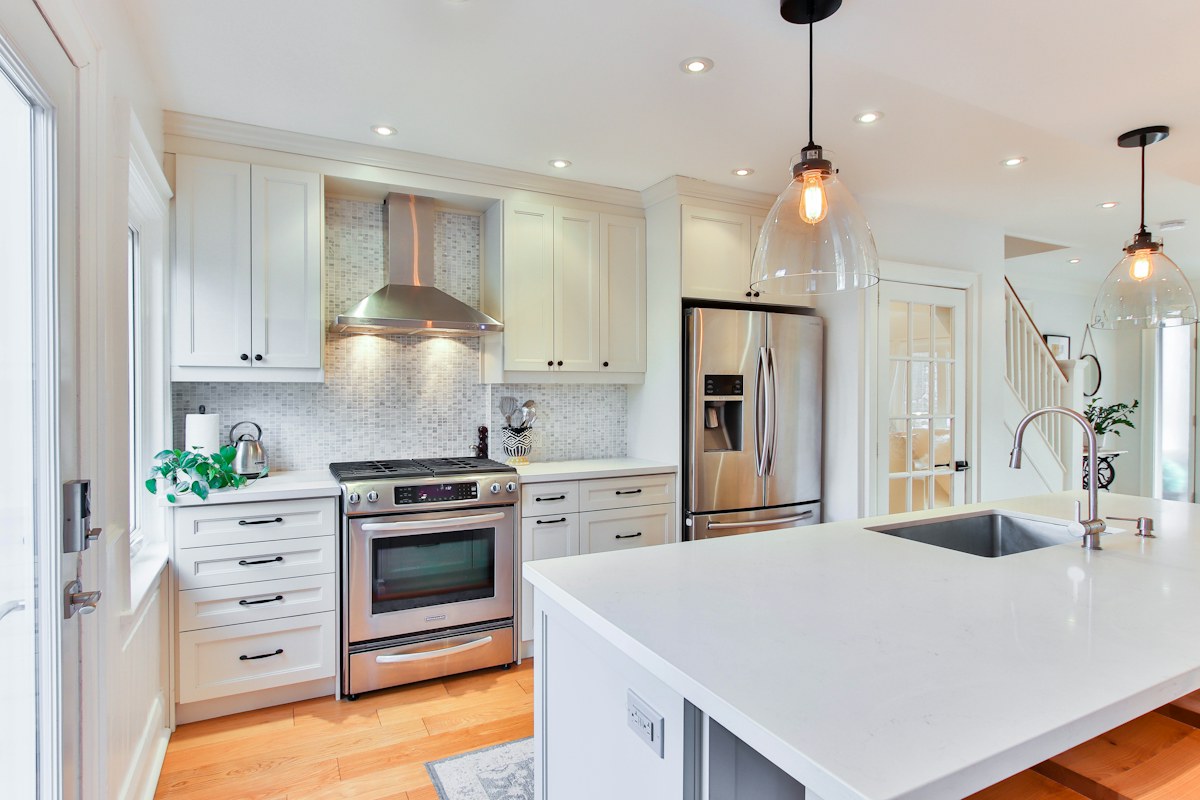
A clear worktop can make a pale kitchen easier to read, but the area should have a real role. Identify the suitable space used for an ordinary preparation or setting-out task. Keep the equipment's actual placement and clearance requirements in view.
Do not choose a patch that stays empty only when useful appliances are moved into unsuitable storage. The room needs an achievable arrangement. A decorative image can suggest simplicity without explaining how the household actually cooks.
Identify the objects currently there
Separate equipment needed for an active task, permanent counter residents and unrelated items waiting for another destination. These are different groups. A bowl in use is not the same problem as a letter that has drifted beside it.
Give the unrelated item its actual next step rather than hiding it in the nearest cupboard. A paper may need a response or a retained reference place. A decorative tray can collect the uncertainty without resolving it.
Compare the visible pale surface
After the task is complete, set aside one optional decorative group and look from the ordinary entrance. The cleared surface may connect the room's cupboards and equipment more clearly. This is a visual change you can assess without buying another organizer.
Keep the necessary objects in appropriate positions. If the reference photograph requires removing every practical trace of the kitchen, it is unlikely to guide a useful daily return. Include the permanent residents honestly.
Define what happens after use
The working patch will not remain empty during preparation. Give used equipment its suitable care route and ready objects their actual storage destinations when the task ends. Keep unfinished care distinguishable rather than shifting it to another surface for the photograph.
Choose a clear return state that another household member can understand. The surface might remain available for the next task with only the equipment genuinely intended to live there. A brief shared agreement is more useful than a new container nobody knows how to maintain.
Try the arrangement through one ordinary meal. If the patch fills again, name the arriving item and the missing destination. A larger tray will not necessarily help when the real issue is an unresolved paper or equipment without suitable storage. The clear area earns its place by supporting work and making the pale room's larger surfaces readable. It should not turn into a demand that the kitchen look unused, but a modest practical boundary whose purpose and return are easy to explain.
Name the patch by its real task and agree what returns there after use. If unrelated papers repeatedly fill it, give those papers their actual next action. A decorative tray can move the problem without making the surface available.
Related reading
A Morning Routine With Room to Breathe, A Slow Weekend That Fits Real Life.
A question or correction? Contact the editorial desk.