Some links on this site are affiliate links. If you buy through a marked affiliate link, we may earn a commission at no additional cost to you. This guide is researched editorial advice; purchases should be checked against current retailer terms. Read our disclosure.
Notice what you already reach for
A jewellery box can be full while the same earrings are worn every week. That repetition contains useful information. Perhaps you prefer a light piece, a fastening you can manage easily or a metal colour that works with your watch. Start by separating regular favourites from items you like to look at but seldom wear. You are looking for patterns, not reasons to discard sentimental objects.
A small daily collection might include simple earrings, one necklace and a ring, but there is no required formula. Some people enjoy bracelets; others find them distracting at a keyboard. Choose for the movements and clothes of your actual day. A piece that catches on a favourite knit may be better reserved for another outfit than replaced with a whole new wardrobe.
Read the material description precisely
Gold-coloured does not establish solid gold, and a photograph cannot verify composition. Look for clear information about the base metal, any plating and the stones or decorative elements. Compare like with like when considering price. If a description is unclear, ask the seller before ordering rather than treating an attractive finish as a guarantee of a particular material.
If you have known sensitivities, seek suitable advice and ask specific material questions. Labels such as hypoallergenic should not replace information about what the piece contains. Keep any documentation supplied for a significant purchase. For valuable stones or unfamiliar treatments, a qualified jeweller can explain what is being sold and how it should be cared for.
Test the practical details
Weight, length and fastening can matter as much as the design. A long necklace may swing into a desk or catch when you lean forward. A heavy earring can feel different after several hours than during a quick try-on. Check whether you can operate a clasp yourself and whether a ring feels comfortable when your hand is relaxed and bent.
Online measurements are worth reading carefully. Use a piece of string to visualise a necklace length against your usual neckline, without treating that as a substitute for fit. Look at photographs showing the piece on a person as well as close-ups. Read any restrictions on returning earrings or personalised items before you buy, since hygiene and customisation terms can vary.
Build combinations around a neckline
Try your favourite pieces with a plain shirt, a crew-neck knit and an open neckline. A pendant that sits neatly above one collar may disappear beneath another. Rather than layering every necklace, choose one visible focal point. If you enjoy several pieces together, check that the chains do not tangle and that clasps sit comfortably.
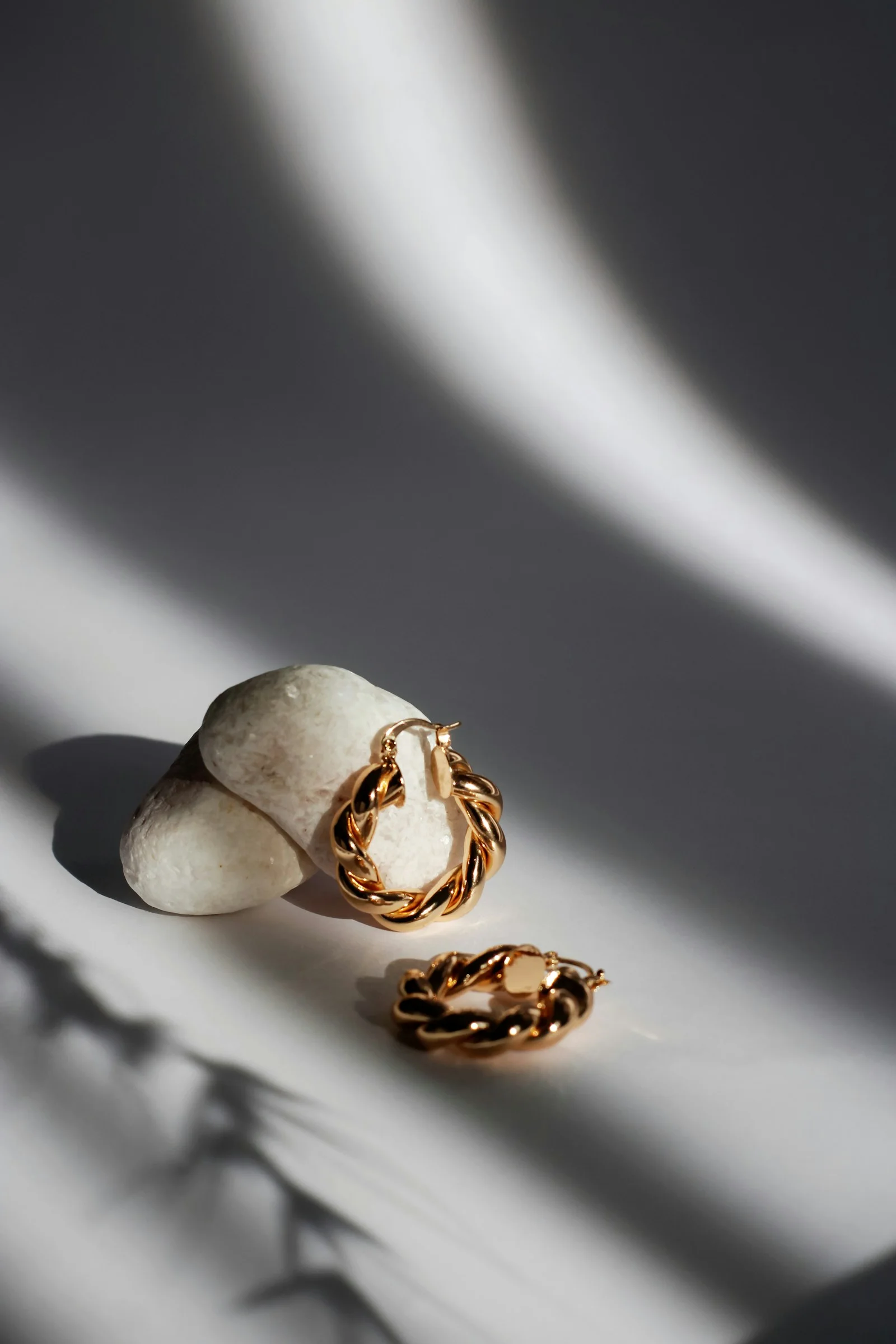
Mixing metal colours is a personal choice, not a mistake to correct through shopping. Repeating a shape or similar scale can make a mixed collection feel deliberate. A pair of small hoops and a simple chain may be enough for an everyday outfit; a larger earring can provide interest when you skip the necklace. Give each piece room to be noticed.
Care according to the actual materials
GIA advises protecting jewellery from damaging chemicals and storing pieces so they do not scratch each other. That is a reason to use separate soft compartments or the original pouch, rather than dropping everything into a bowl. Take particular care with delicate stones, pearls and treated gems, which can have specific requirements. Ask a jeweller when you are unsure.
Avoid assuming an ultrasonic cleaner is suitable for the entire collection. Treatments, settings and organic materials can make professional guidance important. Follow the seller's instructions for a plated finish and keep cosmetics away where recommended. Only use a cleaning method appropriate to the piece. The most convenient universal cleaning gadget can become an expensive mistake when materials differ.
Leave room for repair and meaning
Before replacing a broken favourite, ask whether a clasp, chain or setting can be repaired. Obtain a quote and consider the sentimental value as well as the replacement cost. Have valuable settings assessed by a qualified jeweller when appropriate. A piece inherited or received as a gift may deserve a different decision from a recent fashion purchase.
For something new, identify the outfit or occasion it will serve and set a budget that includes likely care. One carefully chosen piece can make familiar clothes feel fresh without requiring a complete set. Keep the collection easy to see and use. The goal is not a flawless arrangement in a drawer, but jewellery that feels like part of how you dress.
Make a considered choice
| Priority | Useful question | Before paying |
|---|---|---|
| Everyday wear | Is the weight and clasp comfortable? | Try with usual necklines |
| Material confidence | What are the base metal and finish? | Get clear written specifications |
| Long-term use | Can it be repaired and safely cleaned? | Ask a qualified jeweller |
A question or correction? Contact the editorial desk.