Some links on this site are affiliate links. If you buy through a marked affiliate link, we may earn a commission at no additional cost to you. This guide is researched editorial advice; purchases should be checked against current retailer terms. Read our disclosure.
Empty the bag you already carry
Before browsing new shapes, place the contents of your current bag on a table. Separate the daily essentials from receipts, spare packaging and items you carry only occasionally. Keys, phone, wallet, glasses and medication may be non-negotiable; a full notebook might be necessary only on workdays. This gives you a real capacity requirement rather than a guess based on the outside of a bag.
A structured handbag can make a simple outfit feel considered, but appearance should sit beside function. If you frequently carry a bottle and lunch, forcing everything into a compact bag will quickly become irritating. You may be better served by a small handbag plus a washable tote, or by one larger bag with a comfortable strap.
Compare internal space, not just width
A tapered shape loses usable room towards the base, while thick walls and internal compartments reduce the apparent capacity. Check the opening as well as the dimensions: an object that fits inside may be awkward to insert through a narrow zip. For a laptop, compare the device's measurements with the actual padded compartment rather than assuming a screen-size label guarantees a fit.
Try a paper template of the bag's base with your essential items arranged on it. This cannot predict every curve, but it can expose unrealistic expectations. If shopping in person, ask whether you may try placing clean belongings inside. Avoid overfilling a sample or treating a shop display as a durability test.
Consider how you carry weight
Look at the empty weight before adding the day's contents. A decorative chain or substantial hardware can make a small bag surprisingly heavy. A wider strap may distribute the load differently from a narrow one, but comfort depends on your body, clothing and carry position. Try the bag over the coat you wear most often when possible.
Check strap adjustability and where the bag sits when crossbody. A handle drop that works over a T-shirt may be too short over winter layers. Removable straps are useful only if the attachment feels secure and the unused strap is easy to store. If carrying a bag causes pain, reduce the load and seek appropriate advice rather than expecting a premium label to solve it.
Choose a closure for your route
An open tote is easy to access at a desk but may not suit crowded public transport or a wet walk. A full zip can offer more containment, while a flap or magnetic closure may be quicker for frequent access. Check whether there are gaps at the sides and whether you can operate the fastening with the items you normally carry.
External pockets are convenient for a transit card, but assess what you are comfortable keeping within easy reach of others. Keep valuable items in a suitable closed compartment. No handbag can guarantee security, so match the design to sensible everyday habits rather than relying on reassuring marketing language.
Read materials and care together
Smooth leather, textured leather, coated fabric and woven textiles each behave differently. Ask how the specific finish should be cleaned and whether colour may transfer from dark clothing. A pale bag worn against new denim deserves particular care. Material names alone do not tell you how the entire bag, including lining and hardware, will age.
Inspect stitching, edge finishing and the way handles attach. Find out whether repairs are offered and whether replacement straps can be purchased. Follow the maker's care directions instead of applying a general conditioner to an unfamiliar finish. Store the bag without crushing its shape and avoid leaving wet contents inside. These modest habits matter more than an elaborate collection of care products.
Make the purchase earn its place
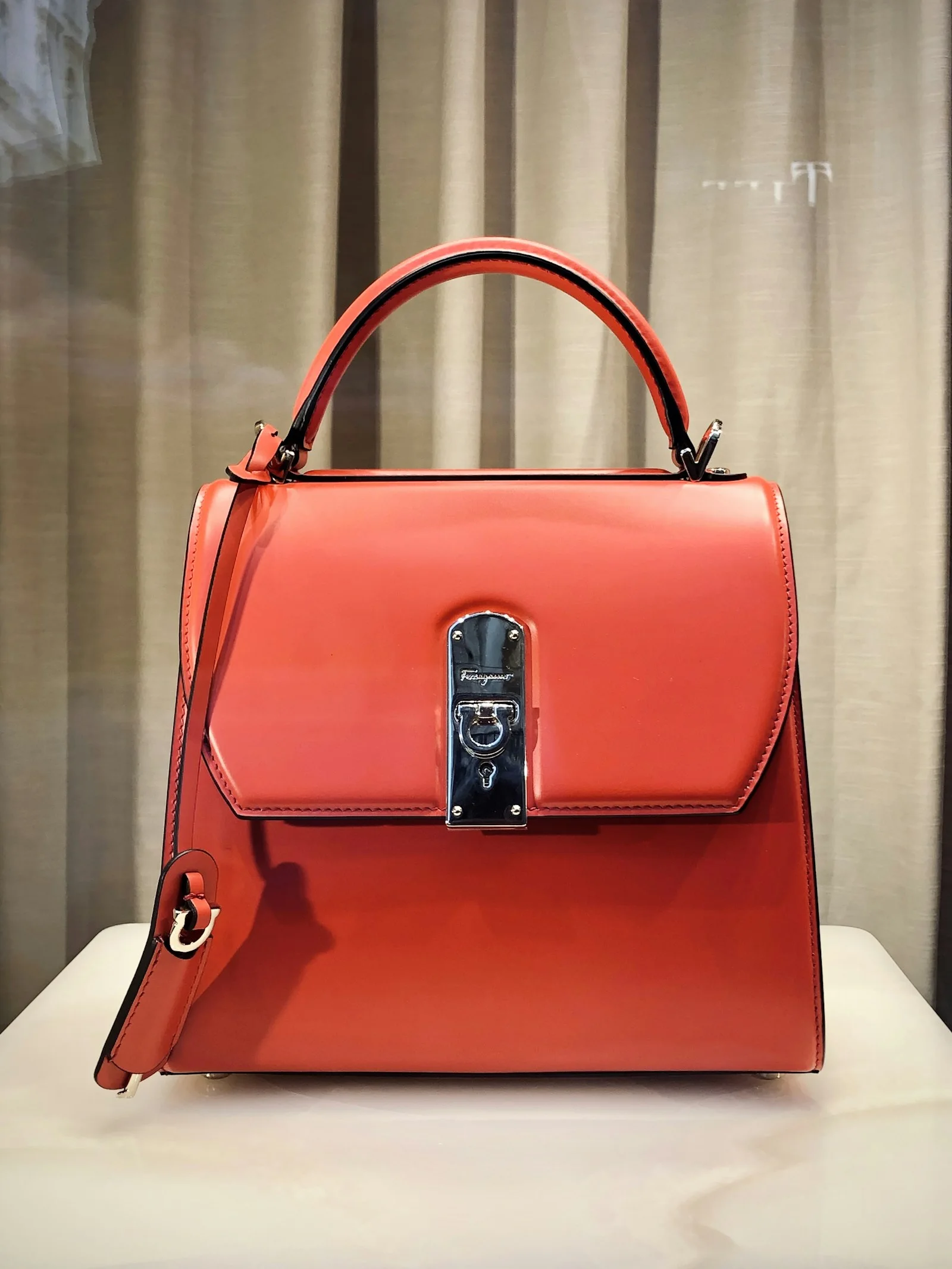
Choose a colour that works with the coats and shoes you actually wear. A red handbag can be the one bright element in a quiet outfit; black or brown may be simpler if you want it to blend in. Neither is automatically more versatile. Think of three complete outfits and two ordinary destinations before deciding.
Compare the full price, return cost and any repair support. A secondhand option can be worthwhile if condition, authenticity and seller terms are clear, but do not overlook worn straps or sticky linings. If your current bag already handles the day comfortably, an inexpensive repair or a thorough sort may deliver more value than buying another shape with the same limitations.
Make a considered choice
| Typical day | Bag feature to prioritise | Potential compromise |
|---|---|---|
| Laptop commute | Measured padded compartment | Greater size and weight |
| Errands on foot | Comfortable adjustable strap | Less structured shape |
| Desk to dinner | Secure compact handbag | Separate tote for larger items |
A question or correction? Contact the editorial desk.