Some links on this site are affiliate links. If you buy through a marked affiliate link, we may earn a commission at no additional cost to you. This guide is researched editorial advice; purchases should be checked against current retailer terms. Read our disclosure.
Choose a familiar base outfit
A beige coat can make a dark outfit feel lighter without changing every item underneath. Begin with a retained base that already serves the day's plan: perhaps dark trousers and a suitable familiar top. Keep the base steady while you consider what the coat adds.
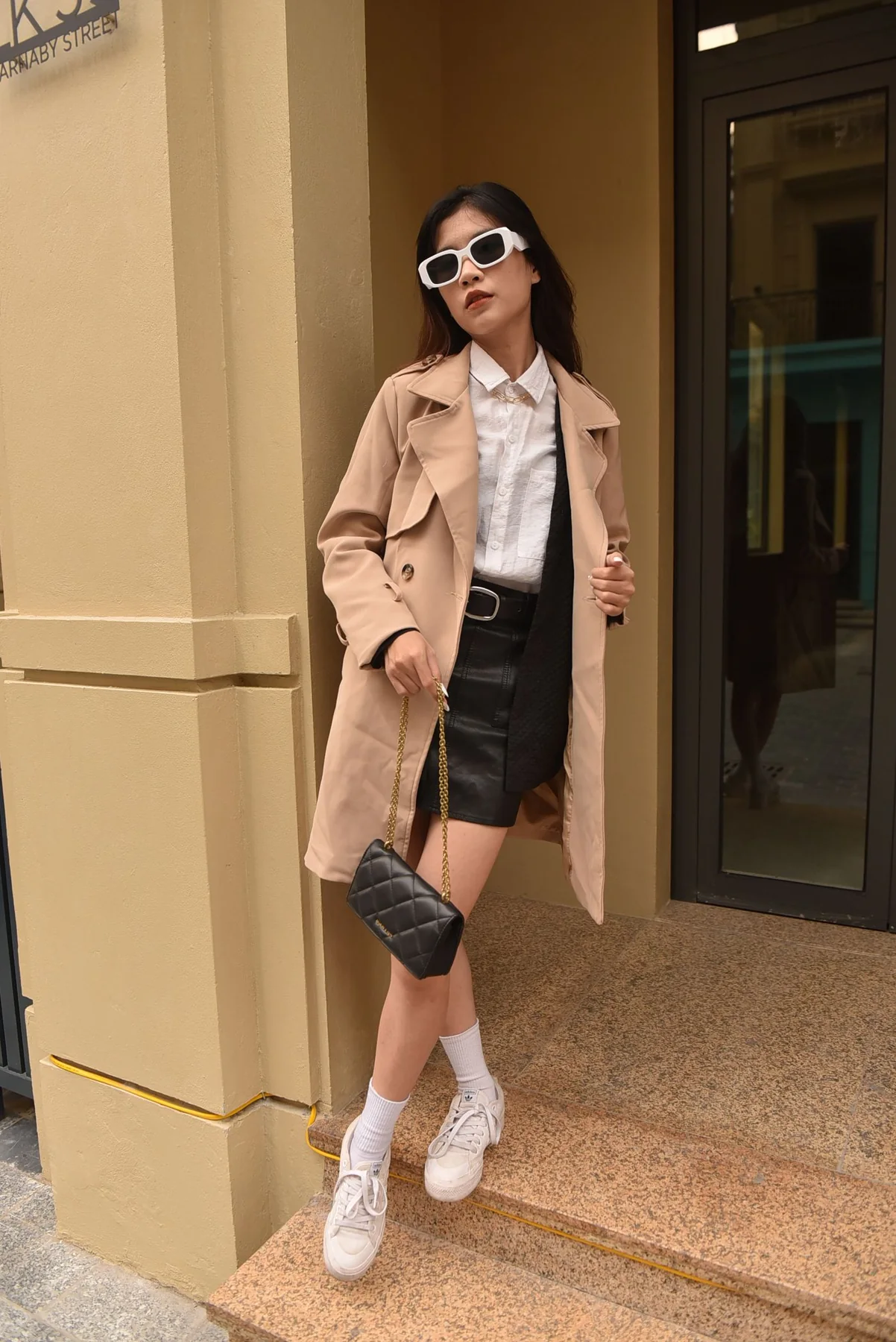
The photograph is an illustration of a light coat with contrasting clothes, not a product test or a rule about which colours suit a particular person. Use the actual garments and ordinary light to make the personal comparison.
Compare the open and closed views
Where the coat is intended to be worn open, notice how its edges frame the darker clothing. Then compare the appropriate closed arrangement. The amount of visible dark fabric changes, so the same outfit may read quite differently between the two positions.
Our open-coat arrangement guide considers a related detail. Follow the particular garment's intended use rather than improvising an unsuitable fastening method for a photograph.
Keep the shoes connected to the plan
Choose the actual suitable shoes for the outing before judging the final proportions. A dark shoe can continue the base visually, while another retained colour may interrupt it in a way you enjoy. The visual effect is secondary to the person's real footwear needs and activity.
If the coat seems disconnected from the shoes, compare a familiar bag or small accessory before changing the whole outfit. A modest repeated tone can be enough where that suits your preference; exact matching is not an obligation.
Check the neckline in ordinary use
Notice the top's visible neckline with the coat in the position you will actually use. A small strip of lighter fabric can shift the relationship between the dark base and the beige outer layer. Try one retained top alternative if the first combination feels unresolved.
The comfortable layering guide keeps the real situation in view. Appearance alone does not establish how a combination serves the person, conditions or indoor part of the day.
Keep the useful version easy to repeat
Once the arrangement suits the actual plan, record the specific pieces rather than the broad colour idea. Two dark tops can have different lengths, necklines and care needs, so a simple colour formula may not preserve what worked in the comparison.
What if the beige coat overwhelms a base you otherwise like? Try a different retained proportion before assuming the colour is wrong. What if the day requires another outer layer? Keep the useful dark base and choose suitable clothing for the real conditions. A considered coat outfit uses contrast to connect existing pieces while allowing practical requirements to shape the final choice.
Return the coat through its actual care and storage routine after use. A repeated outfit becomes easier when every named piece has an understandable ready state, rather than merely appearing together in a saved photograph.
A question or correction? Contact the editorial desk.