
Some links on this site are affiliate links. If you buy through a marked affiliate link, we may earn a commission at no additional cost to you. This guide is researched editorial advice; purchases should be checked against current retailer terms. Read our disclosure.
Count activities before counting clothes
A capsule wardrobe is useful when it reduces friction, but a fixed number of garments cannot describe every life. Someone who cycles to work, attends a formal office and spends weekends outdoors has different needs from someone working at home. Begin with the last two weeks of your calendar. Mark the clothes you wore for work, movement, social plans and rest. Include the unglamorous moments: collecting groceries in rain, sitting on the floor with a child, or carrying laundry up stairs. Those are genuine wardrobe requirements.
Separate your routine from occasional events. A wedding outfit can remain in your wider wardrobe without being forced into a weekly capsule. The same is true of technical clothing and protective workwear. Your small everyday selection should support the days that happen most often, while occasional pieces stay accessible and cared for elsewhere.
Choose anchors you already reach for
Take out the trousers, skirts or dresses you wear willingly, not the ones you feel you ought to wear. Try each on and check comfort in motion. A reliable pair of trousers can anchor several tops, while an uncomfortable waistband will undermine every combination. Look for recurring features in your favourites: a higher rise, a soft shoulder, a certain sleeve length or a fabric weight. These clues describe your preferences more accurately than a generic list of essential items.
Build a loose colour family around those anchors. Two darker shades, one lighter shade and an optional accent can be enough to begin. They need not be neutrals, and every piece need not match everything else. Aim for several combinations you enjoy rather than theoretical compatibility. A patterned skirt that works with three existing tops may deserve its place more than a plain shirt you never choose.
Allow for laundry and real weather
Laundry frequency determines how many repeated basics you need. If you wash once a week, a three-top capsule may require more planning than it saves, especially during hot weather or an active commute. Note which garments need separate care and how long they take to dry. A capsule based on delicate fabrics may look compact but demand more time and expense. Keep enough comfortable alternatives that one spill does not make the next morning difficult.
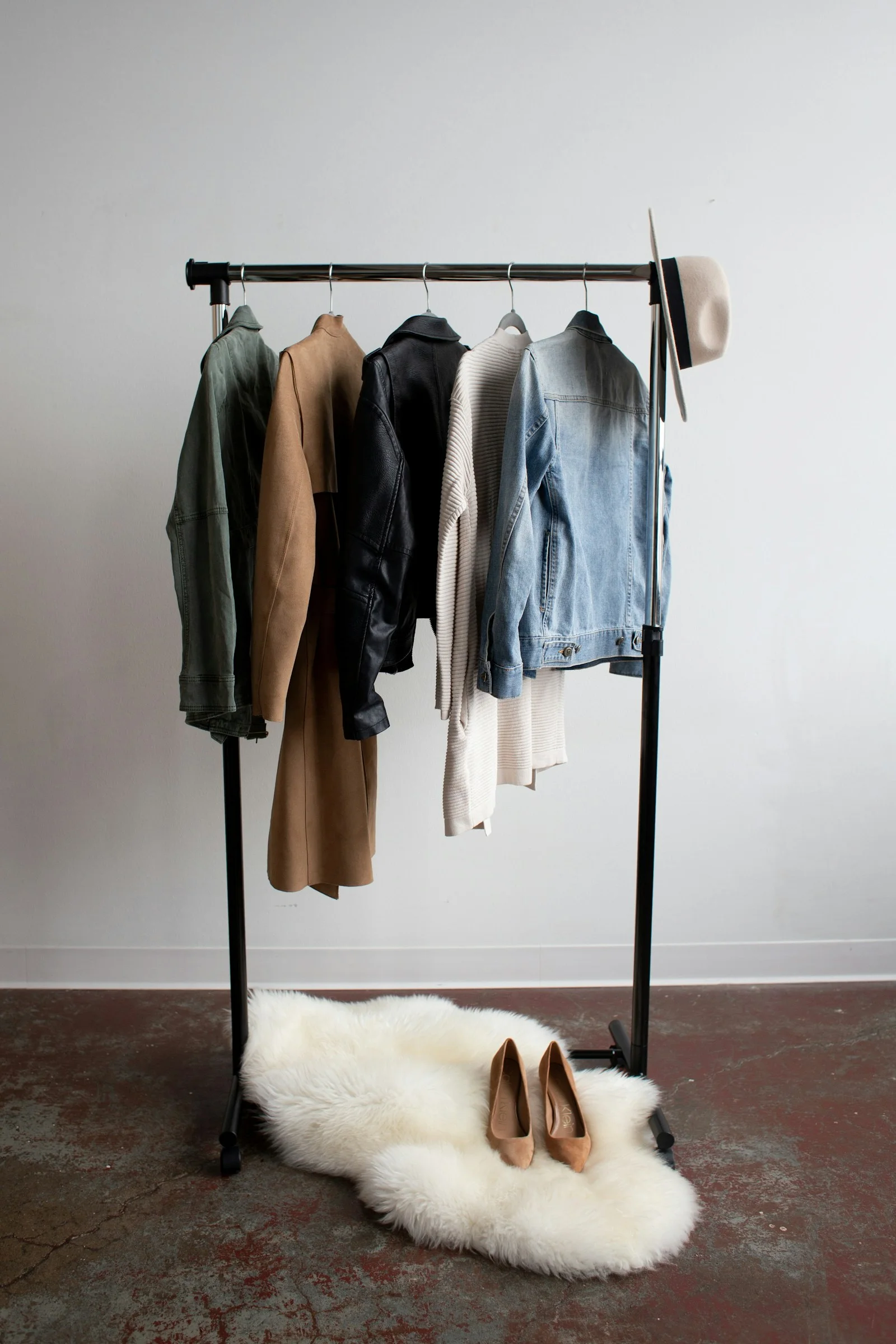
Make the outer layers and shoes part of the plan. An elegant indoor selection is incomplete if none of it fits beneath the coat you wear daily. Try jackets over your thickest likely layer, and check whether trouser hems work with both dry-weather and wet-weather shoes. Seasonal capsules can overlap; there is no need to replace everything when the calendar changes if the local weather has barely moved.
Find gaps through outfit trials
Arrange complete outfits and wear each around the house for a few minutes. Sit, reach up and bend down. Photograph the combinations that feel good. A gap is a specific obstacle repeated across several outfits, such as lacking a washable layer for a chilly office. It is not simply an empty space in a checklist. Write the function of the missing item before naming a product: a lightweight layer with sleeves that fit under a coat is more useful guidance than buy a cardigan.
Shop for one gap at a time. Compare fabric composition, measurements, return conditions and likely care cost. If ordering online, measure a similar garment that fits rather than relying only on a size label. Try the new arrival with several anchors before removing tags, following the retailer's return rules. A piece that needs three further purchases has probably not solved the original gap.
Keep a flexible review point
Use the capsule for a few weeks before making permanent decisions about the rest of your clothes. Store uncertain items clean and dry, with a short note explaining why they were set aside. If you repeatedly retrieve something, that is evidence it belongs in the working selection. If an item stays untouched, consider whether the season, fit or activity has changed before deciding to sell, repair or donate it. A capsule is an experiment in use, not a test of discipline.
Review what became easier. Perhaps choosing clothes took less time, or you noticed that one washable dress covered several plans. Keep the lessons and loosen any restriction that caused trouble. Buying fewer things can be a welcome outcome, but the useful measure is whether your clothes support your days. Allow room for personal expression, changing bodies and an occasional piece chosen simply because you enjoy wearing it.
Make a considered choice
| Question | Useful evidence | Possible next step |
|---|---|---|
| Do I need more basics? | Laundry and wear frequency | Add only the repeated gap |
| Does this colour belong? | Three combinations you enjoy | Keep or reconsider |
| Should I remove this piece? | Several weeks of actual use | Store temporarily before deciding |
A question or correction? Contact the editorial desk.