Some links on this site are affiliate links. If you buy through a marked affiliate link, we may earn a commission at no additional cost to you. This guide is researched editorial advice; purchases should be checked against current retailer terms. Read our disclosure.
A small kitchen can feel crowded before the first ingredient is cut. Shopping bags, spare bowls and a recipe all occupy the worktop, leaving the board balanced in the last clear patch. Choose one proper preparation zone and let the rest of the meal support that position.
Select the working patch first
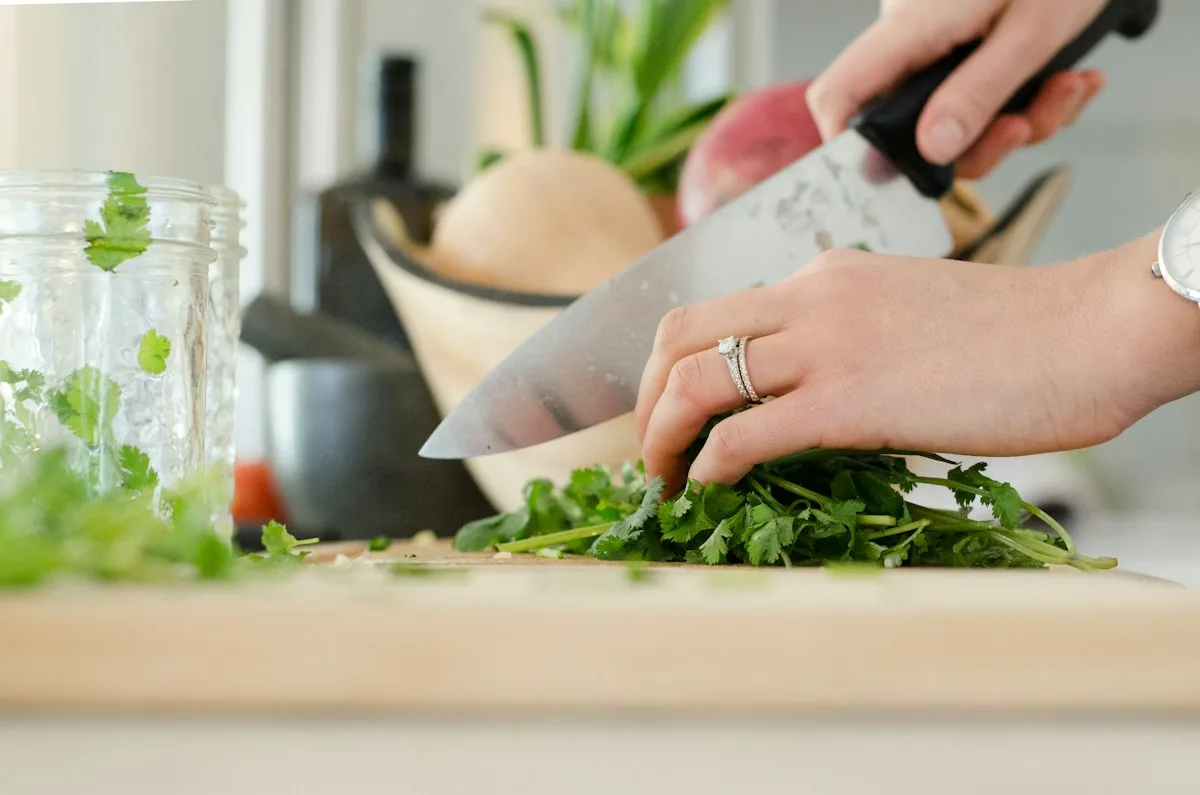
Choose a suitable surface with enough room for the board and the movement of the task. Keep it stable, clear and appropriate for food preparation. Do not cover an appliance or use an unsuitable surface just because it looks like spare counter space.
Set the recipe where it can be read without occupying the board. A printed sheet, book or device needs its own appropriate position away from the immediate food handling. Read the full method before deciding which equipment must remain close.
Bring forward only the current group
Put the ingredients for the next stage within reach. Leave later ingredients in suitable storage or another appropriate position until needed. This reduces the number of things that must be moved each time the board is used.
Keep raw and ready-to-eat foods appropriately separate and use suitable cleaning and equipment practices. A single working zone does not mean every food should share the same board without the necessary changeover. Follow reliable food handling and the requirements of the chosen recipe.
Give prepared ingredients a destination
Choose the suitable bowl, pan or other destination before starting the preparation. Once an ingredient is ready, move it there in the intended way rather than building a large heap around the board's edge. This keeps the remaining work visible and the board usable.
Do not group ingredients that the method uses at different times solely to save one bowl. The space saved can create a cooking problem later. A small number of clearly assigned containers is more useful than a single mixed collection whose next step is uncertain.
Close the zone between stages
When the current preparation stage is complete, clear scraps and attend to the board, tools and surface as required before the next use. Put unused ingredients away appropriately. The transition is part of preparing the meal, not an optional tidy after cooking has already begun.
If another person is helping, say whether the zone is ready for their task or still needs attention. A clear handover is easier than expecting them to interpret an apparently empty board. After the meal, notice which object repeatedly invaded the working patch. Give that object another suitable home rather than making the preparation area smaller each time. One reliable zone can make a compact kitchen easier to use without requiring a new organiser for every tool.
Related reading
One Clear Worktop Patch in a White Kitchen, Useful Kitchen Objects Can Supply the Color.
A question or correction? Contact the editorial desk.