
Some links on this site are affiliate links. If you buy through a marked affiliate link, we may earn a commission at no additional cost to you. This guide is researched editorial advice; purchases should be checked against current retailer terms. Read our disclosure.
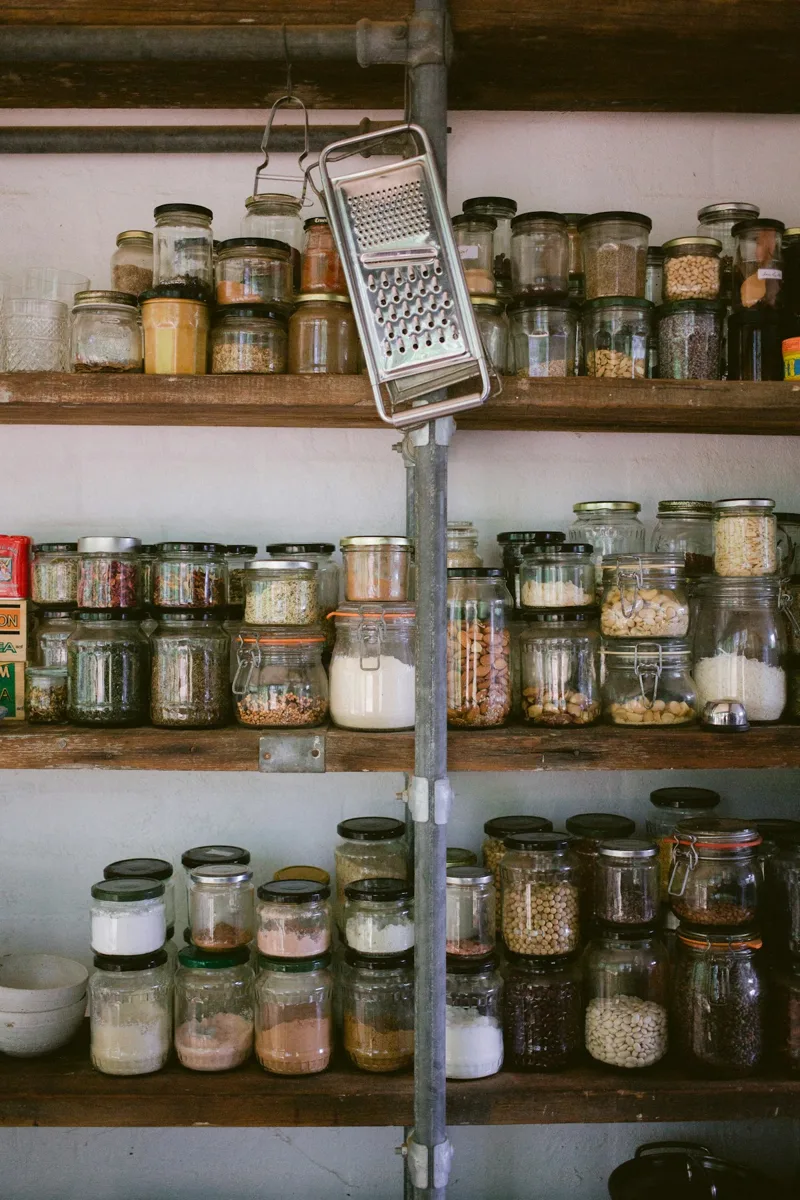
A pantry shelf can be readable when it is first arranged and confusing after the first few uses. A jar returns with its label facing the wall, another moves into the empty gap and similar contents become difficult to distinguish. Make the return movement part of the arrangement.
Read from the position where you choose
Stand where you normally reach for the pantry group. Look at the identifying information from that view rather than from a close-up photograph. A label that looks clear in your hand may be hidden behind the shelf edge when the jar is returned.
Keep important product information available. If food has been transferred to a suitable container, retain the necessary ingredient, date and storage details with it. A decorative front label alone may not provide everything the next person needs to identify or use the food appropriately.
Give similar jars distinct places
Separate products that are easy to confuse. A consistent shelf position can support identification, but it should not replace reading the label. Check the actual contents before using them, particularly when different foods have a similar colour or texture.
Avoid filling every gap immediately when a jar is removed. Leave its ordinary place understandable so the jar can return without a search. If several people use the shelf, agree the broad grouping rather than assuming everyone recognises a private arrangement based on jar height.
Return the label to the working view
After use, close the container properly and put it back with the useful information facing out. Wipe or handle it as appropriate for its material and contents before returning it. A sticky or damp exterior can make the next retrieval awkward even when the label is visible.
Check that the jar sits fully supported and does not project beyond the shelf. A large lid may make the container wider than its base suggests. Keep the shelf within its intended limits and avoid balancing one jar behind another merely to preserve a symmetrical front row.
Review the failures rather than relabelling everything
If one item repeatedly returns to the wrong place, ask why. Its usual position may be difficult to reach, or two nearly identical jars may need a clearer distinction. Change that specific part before creating a new complete set of labels.
Remove empty containers from the ready group unless they have a clear immediate role. An empty matching jar can look like stock from a distance and mislead the next shopping check. Keep the pantry arrangement connected to the food actually present. A clear return position helps a modest shelf stay useful without requiring every package to be decanted or every jar to match.
Related reading
Useful Kitchen Objects Can Supply the Color, One Clear Worktop Patch in a White Kitchen.
A question or correction? Contact the editorial desk.