Some links on this site are affiliate links. If you buy through a marked affiliate link, we may earn a commission at no additional cost to you. This guide is researched editorial advice; purchases should be checked against current retailer terms. Read our disclosure.
Describe the actual rainy-day sequence
A rainy-day outfit includes more than a coat and umbrella. Consider the real sequence of leaving home, travelling and arriving indoors, including what needs to happen to the bag at each stage. Choose suitable clothing and products through their actual requirements and the person's needs.
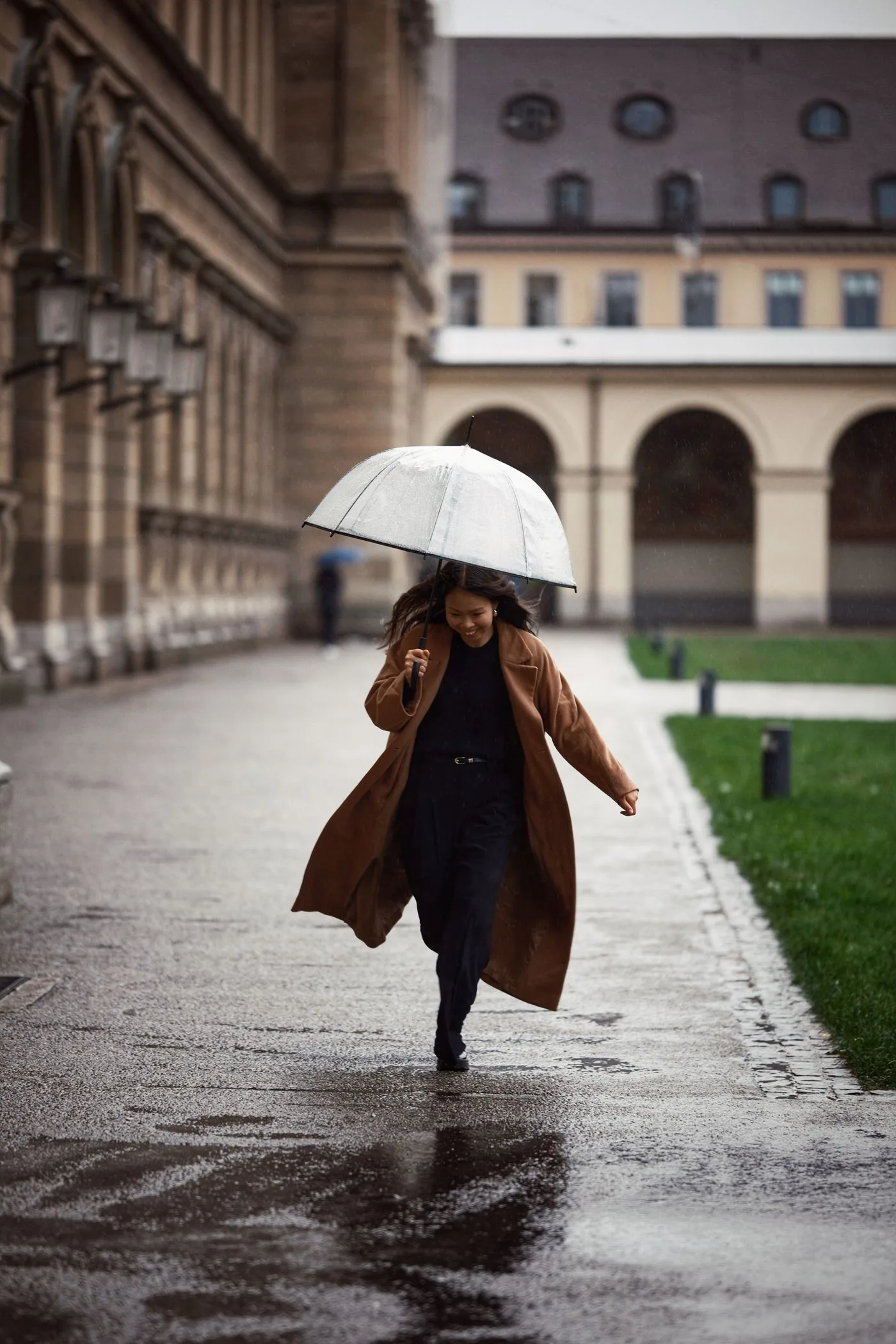
This article organizes that handover rather than promising weather protection or prescribing a universal handling method. The illustrative street photograph cannot establish the performance or appropriate care of another coat, umbrella or bag.
Choose the bag for the real contents
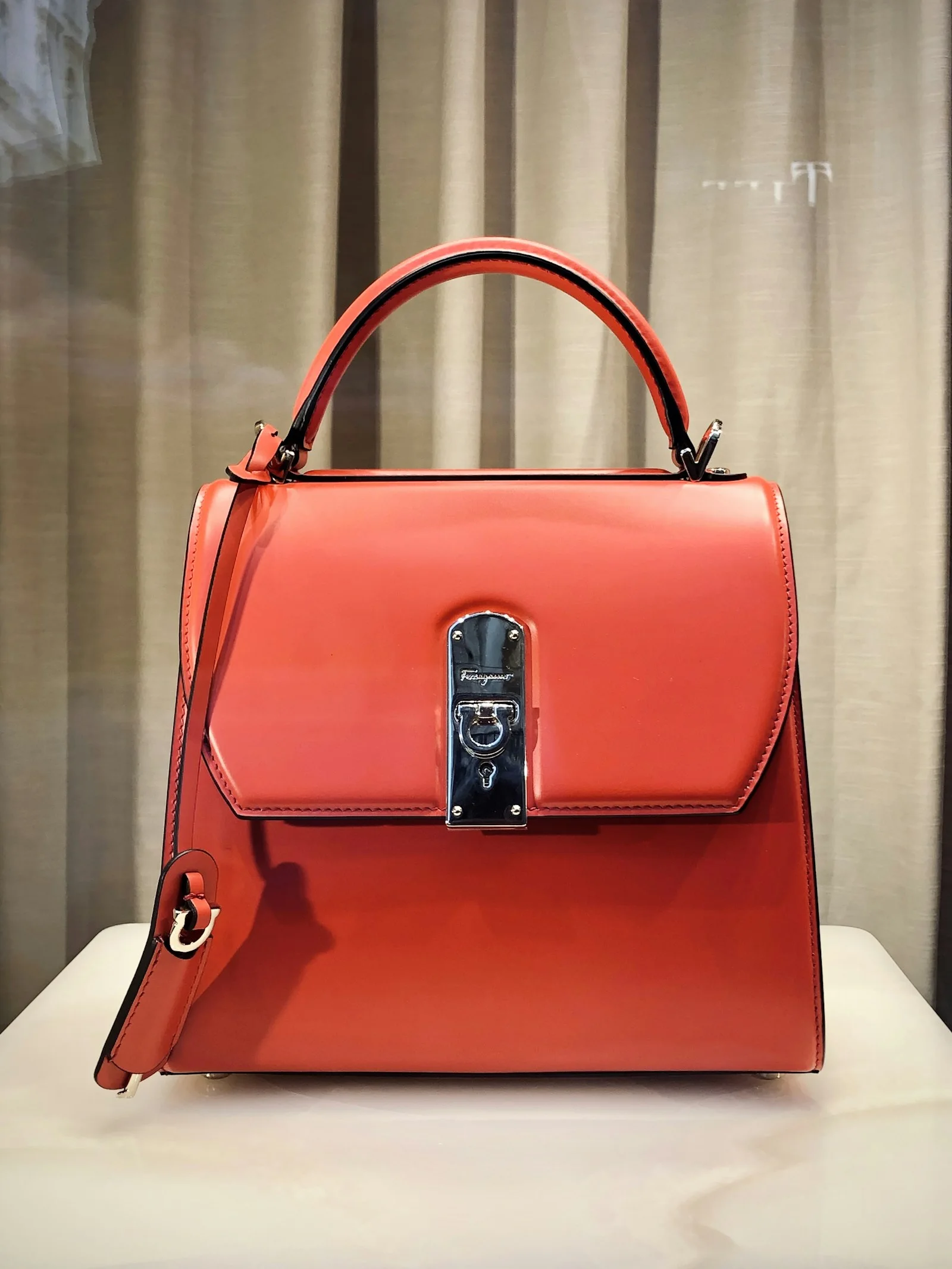
List the items needed for the outing and select an appropriate retained bag. Keep its intended use, actual condition and supplied care information in view. A small bag may simplify one outfit but cannot serve a contents group it does not accommodate appropriately.
Our bag and actual-day guide keeps this decision concrete. The rainy-day context should refine that real task rather than turn the bag into a purely decorative counterpart to the coat.
Keep the arrival destination clear
Identify where the bag appropriately goes when the person reaches the actual destination. Keep relevant venue arrangements and the products' requirements central. Do not assume a particular chair or floor position is suitable merely because it appears in an inspiration image.
If several objects need attention on arrival, make the normal sequence understandable without inventing a complicated ritual. The useful arrangement gives each item a genuine destination and leaves private belongings handled appropriately.
Separate ready objects from care questions
Follow the relevant product guidance when conditions affect an item's state. A bag returned to its usual place should not imply that every required care stage has occurred. Keep an unresolved condition question explicit rather than hiding it inside the usual ready group.
The shared care handover guide considers how another adult understands an ordinary clothing task. The same clarity helps here, while each product's actual instructions determine its care.
Review the recurring interruption
Notice which specific part of the outing repeatedly becomes cumbersome. Perhaps required contents are difficult to identify, or the arrival arrangement has no appropriate destination for one item. Address that actual problem before assuming a new bag is needed.
What if the retained bag is unsuitable for the planned conditions? Choose another appropriate option through real product information. What if the outfit looks coordinated but the handover remains unclear? Resolve the practical destination instead of adding another accessory. A considered rainy-day outfit carries its useful arrangement into the indoor stage and leaves each object with an honest next step.
Keep a short note of the actual products and any unresolved question. Broad labels such as waterproof bag should not replace verified manufacturer information about the item that will really be used.
A question or correction? Contact the editorial desk.