Some links on this site are affiliate links. If you buy through a marked affiliate link, we may earn a commission at no additional cost to you. This guide is researched editorial advice; purchases should be checked against current retailer terms. Read our disclosure.
A dinner table can look balanced from above while a drink is awkward to reach from the chair. A tall glass hides behind a serving dish, a sleeve passes over a candle or a mug handle points into the next place setting. Sit down before considering the arrangement finished.
Use the actual place setting
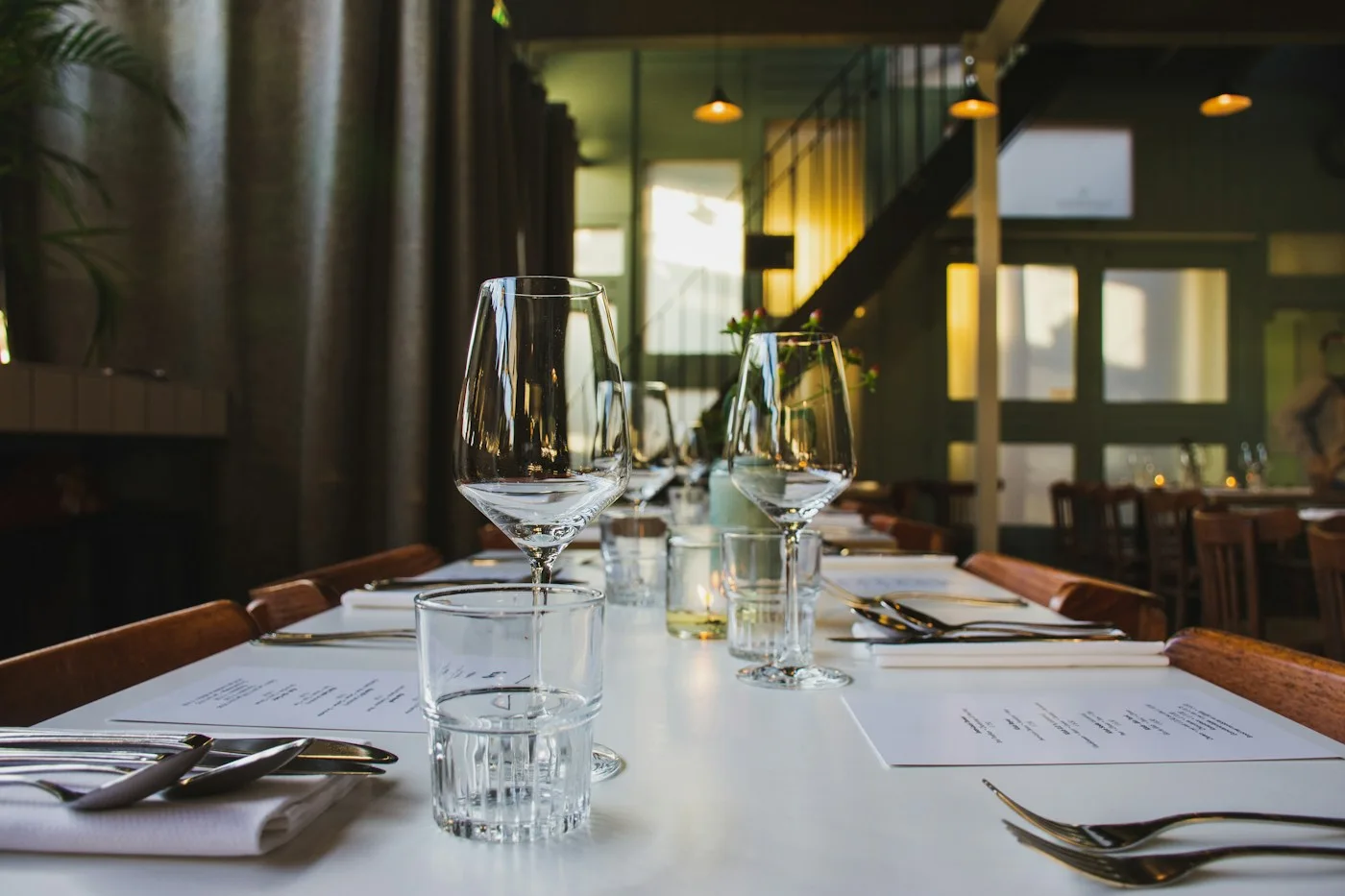
Put out the plate or bowl and the cutlery intended for the meal. Add the drinking vessel that will actually be used, rather than a smaller substitute chosen only for the layout test. Different shapes can occupy similar bases while behaving differently when lifted.
Sit at the place and make an ordinary reach. Check that the hand can approach the vessel without crossing over another person's setting. Leave enough room to lift and return it without catching a knife handle or resting it partly on a folded napkin.
Compare the tall and low objects
Look across the table from seated height. A tall glass or jug may interrupt the view or stand close to an ordinary arm movement. Decide whether the object needs to stay there throughout the meal or can have a suitable separate serving position.
Keep decorative objects away from the practical reach. If candles are used, follow suitable candle safety and keep them clear of the movement and materials around them. The place setting should not require a person to reach over a flame to pick up a drink.
Check the whole table rather than one ideal seat
Repeat the reach at the narrowest or most crowded place. A small table may have a corner where the same arrangement behaves differently. Move a shared dish or reduce an unnecessary layer of crockery rather than assuming every setting must be identical in position.
Consider the actual people using the table. A vessel that is comfortable for one guest may not suit another. Offer an appropriate everyday alternative when needed, without making the whole meal depend on one matching glassware choice.
Leave a clear return patch
A drink needs somewhere to come back after the plate has shifted or the shared food has arrived. Keep a stable patch available through the meal, not only during the initial setup. If a jug is passed around, give it a defined landing place too.
After clearing, notice which objects were moved repeatedly. Use that observation for the next setting instead of restoring the same awkward layout because it looked tidy before dinner. A useful table arrangement supports repeated small movements throughout the meal. The seated reach is a better test of that work than the first overhead photograph.
Try the same reach with the chair pulled into its normal eating position.
Related reading
A Plain Napkin Beside Strong Tableware, Coffee Cups and Plates From Different Sets.
A question or correction? Contact the editorial desk.