Some links on this site are affiliate links. If you buy through a marked affiliate link, we may earn a commission at no additional cost to you. This guide is researched editorial advice; purchases should be checked against current retailer terms. Read our disclosure.
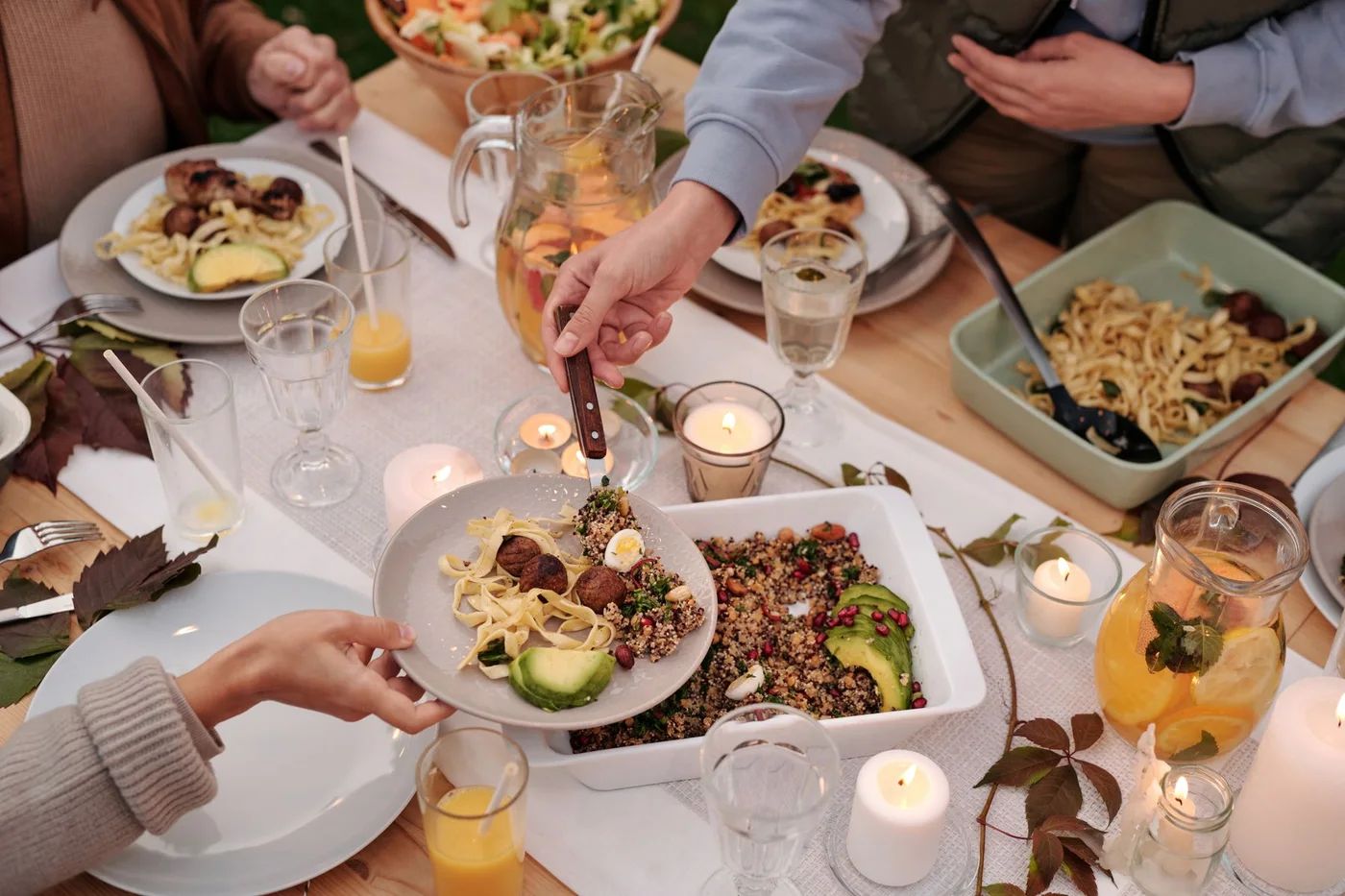
A serving bowl needs more than an initial place on the dinner table. Once it has been passed or lifted, it must come back somewhere stable without displacing a glass or landing on a folded napkin. Reserve that return position before the rest of the table becomes full.
Test the bowl and utensil together
Place the empty bowl where it is intended to stand and add the serving utensil. Include the handle's full length, not just the bowl's base. A spoon balanced at an angle can extend well beyond the footprint shown in a product photograph.
Check that the surface suits the bowl and the food being served. Use appropriate protection where needed and follow the equipment's intended use. A decorative object that resembles a serving bowl is not automatically suitable for holding or carrying a particular food.
Decide whether the bowl moves
Some meals work well with a bowl staying in one position while a serving utensil is used. Others involve passing or lifting it. Choose the arrangement around the actual weight, shape and people at the table rather than assuming every shared dish should circulate.
For a heavy or hot dish, a suitable separate serving position may be more practical than passing it between guests. Keep the route clear and use appropriate handling. A smaller table does not need every serving dish in the centre throughout the meal.
Keep the landing place recognisable
Leave the return patch clear after the bowl leaves it. Avoid immediately moving a glass, bread basket or decorative item into the gap. A temporary empty area is doing useful work when it gives the bowl somewhere predictable to return.
If several shared dishes are involved, keep their roles distinct. A lid or utensil may need its own suitable position rather than resting against another serving piece. Reduce the number of dishes on the table if the arrangement requires repeated balancing or stacking.
Watch the first serving rather than the whole meal
At the first use, notice whether the bowl can be lifted and returned without reaching awkwardly across a place setting. Make a small adjustment before the table becomes busy. Ask a nearby person to help where appropriate instead of stretching over another guest's plate.
When the meal is finished, clear the serving group in manageable parts. Keep the utensil associated with the used bowl until both reach their suitable cleaning destination. If the return position repeatedly disappeared during dinner, change the table arrangement next time. The empty space beside a shared dish can be as useful as the dish itself when it supports an ordinary meal.
Related reading
A Timber Table Without a Matching Timber Set, A Plain Napkin Beside Strong Tableware.
A question or correction? Contact the editorial desk.