Some links on this site are affiliate links. If you buy through a marked affiliate link, we may earn a commission at no additional cost to you. This guide is researched editorial advice; purchases should be checked against current retailer terms. Read our disclosure.
Let the dress remain the reference
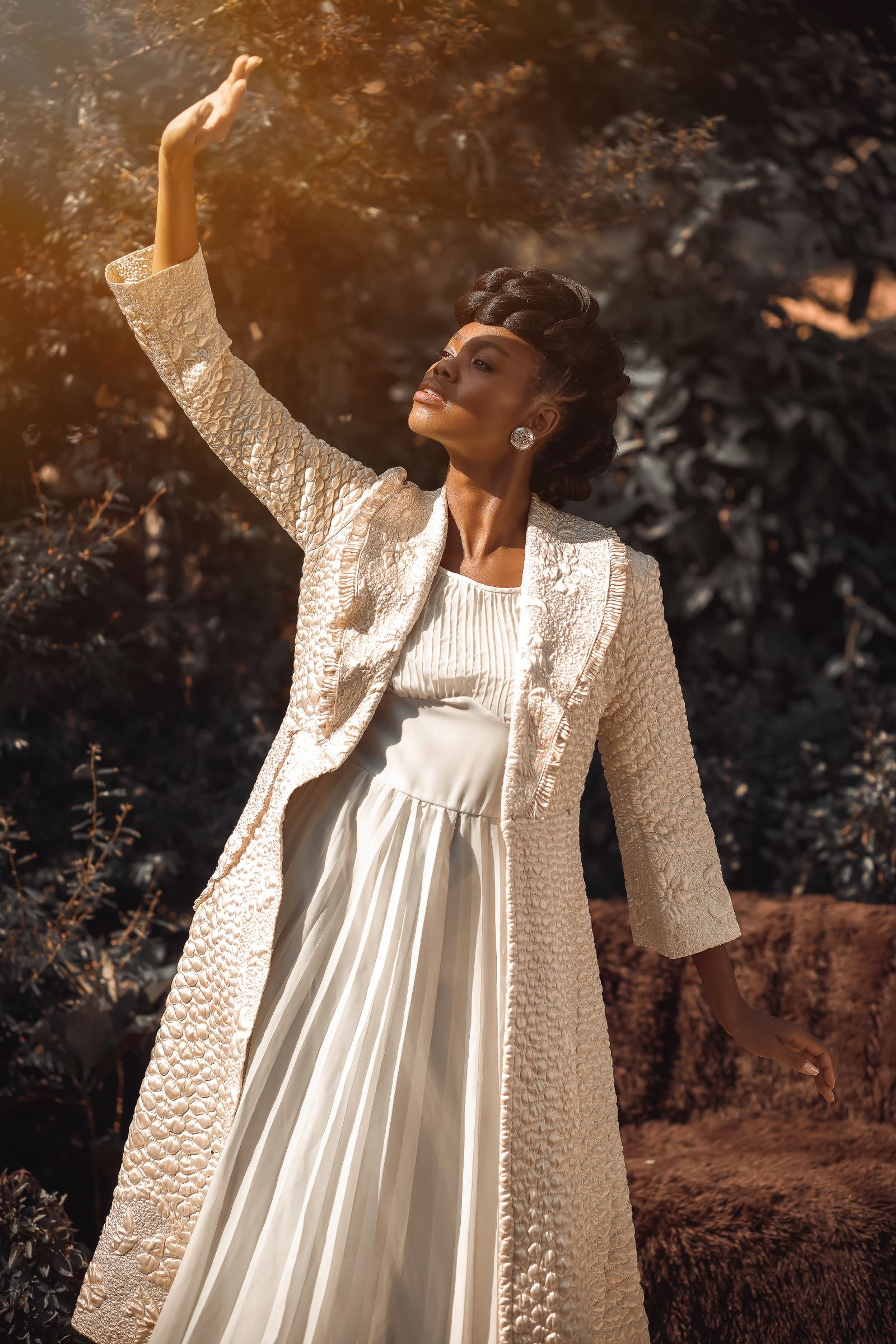
A textured jacket can add detail to a dress outfit without changing the dress itself. Begin with the retained dress, suitable shoes and actual plan. Try the appropriate jacket and notice how its outline relates to the dress in a complete ordinary view.
The photograph illustrates a light dress with a textured layer, not verified material specifications or a personally tested outfit. Check the actual garments' identity, construction and relevant requirements rather than inferring them from a visible surface.
Compare where the jacket ends
Notice the relationship between the jacket edge and the dress details that remain visible. A short layer can expose a different part of the garment from a longer one. Neither arrangement is universally correct; choose the appearance that suits your preference and actual use.
Our dress layer length guide explores a related small comparison. Keep the base outfit steady so the textured jacket's contribution remains understandable.
Consider detail at the neckline
Look at the dress neckline beside the jacket's visible texture. If both pieces contain strong detail, decide whether that richness is what you want or whether a quieter retained layer serves the outfit better. Do not assume every dress needs another decorative accessory.
If a familiar necklace belongs to your preference, introduce it after the two garments have a clear relationship. One change at a time makes it easier to identify what helped rather than attributing the effect to a whole group of simultaneous purchases.
Include the removed-layer view
Consider the dress outfit when the jacket comes off during the actual plan. Keep the person's needs and the indoor activity central. A successful arrival view should not conceal a base outfit that does not serve the later stage.
The everyday dress guide keeps the full arrangement connected. Choose the jacket as a useful option rather than a permanent cover needed to make the dress feel complete.
Keep the useful texture comparison
Record the actual dress and jacket if the combination serves a recurring activity. A broad label such as cream layer may hide important differences in length, construction and surface detail. Preserve the specific relationship without turning a personal preference into a general rule.
What if the textured jacket overwhelms the dress? Compare a suitable quieter retained layer before buying an accessory intended to balance it. What if the visual relationship works but the garments do not serve ordinary use? Let the real requirements guide the choice. A considered jacket-and-dress outfit gives texture a purposeful place within a complete useful arrangement.
Follow the individual care requirements when returning the pieces after use. Their coordinated appearance does not mean that both garments can share the same care method, storage arrangement or ready-state assumption.
A question or correction? Contact the editorial desk.