Some links on this site are affiliate links. If you buy through a marked affiliate link, we may earn a commission at no additional cost to you. This guide is researched editorial advice; purchases should be checked against current retailer terms. Read our disclosure.
Identify the actual coat rather than the era
A vintage coat deserves a specific garment check rather than a decision based only on an appealing era or silhouette. Begin with the actual item, seller's description and visible product information. Keep uncertain identity, condition or material details explicit instead of filling the gaps with an attractive story.
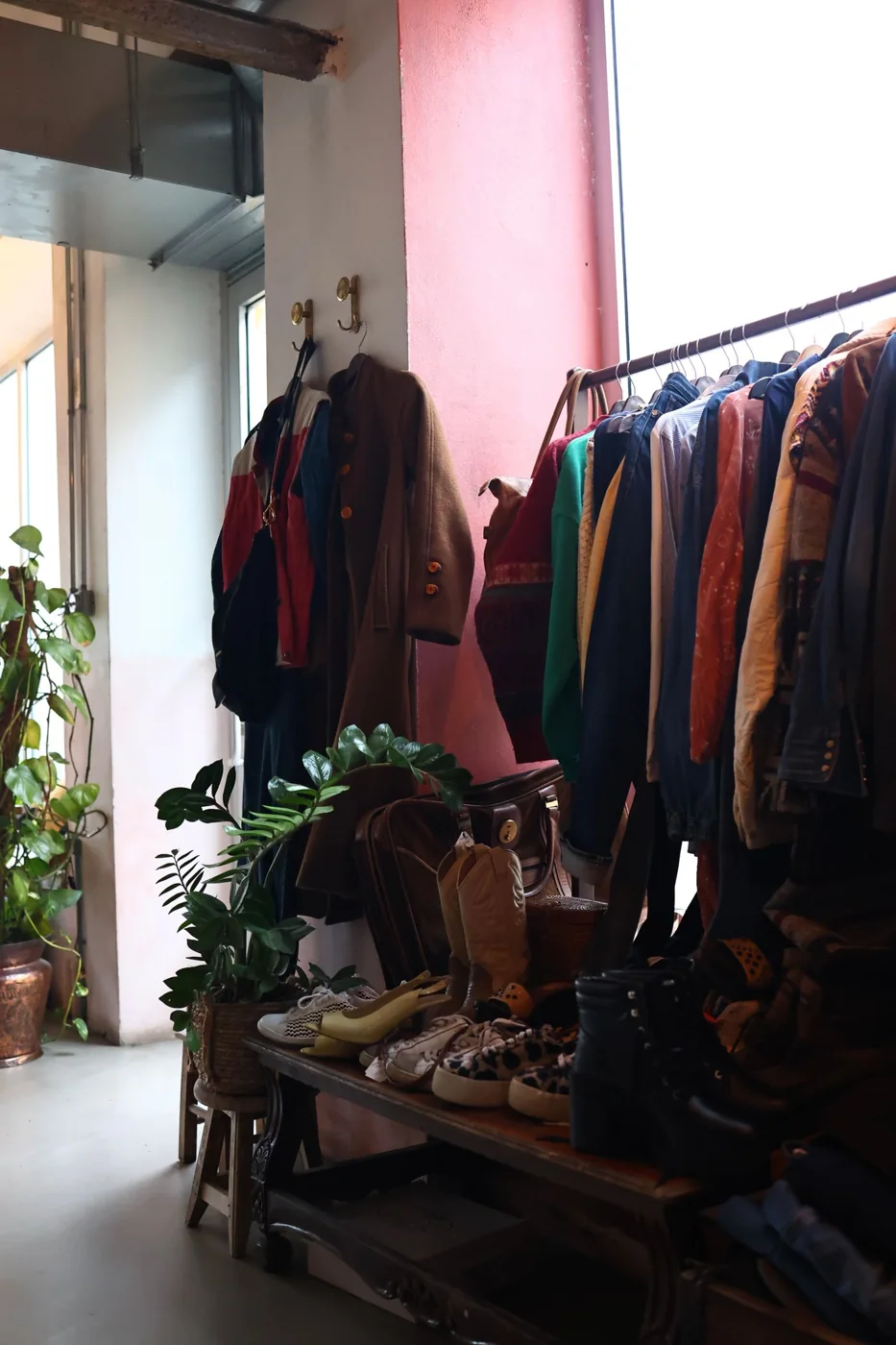
The shop photograph illustrates a retained clothing group, not authentication or endorsement of a particular purchase. This guide prepares questions for a considered comparison rather than certifying age, origin or value.
Ask about the inside information
Look for the actual labels and relevant construction details through the seller's permitted viewing arrangement. Ask clear questions where a photograph or description leaves the inside unclear. A familiar-looking outer fabric does not establish composition, lining condition or the correct care method.
Our considered wardrobe edit guide keeps useful retained clothes central. A vintage purchase should answer a real clothing role rather than enter the wardrobe because its story sounds more complete than its practical information.
Keep condition questions specific
Name the particular detail that needs clarification and seek appropriate garment or specialist guidance where necessary. Avoid assuming that a small visible issue is merely cosmetic or that every repair will be straightforward. The actual item and relevant expertise determine what can responsibly be concluded.
If the seller cannot resolve a question, keep that uncertainty in the decision. An elegant exterior should not make missing information disappear, and a low asking price does not automatically make an unsuitable garment useful.
Compare it with a real retained outfit
Identify the suitable clothes and shoes the coat would accompany for an actual plan. Where an appropriate try-on is available, consider the complete outfit and the person's needs. A hypothetical collection of future combinations is less useful than one clear role within the existing wardrobe.
The reference outfit guide keeps that comparison concrete. Check the relevant seller terms and product information rather than assuming that a familiar shopping arrangement applies to every vintage item.
Record what is known and unresolved
Keep the actual item reference, verified description and any remaining questions together. Separate seller statements from personal impressions. This modest note makes the decision easier to review without inventing provenance or treating an appealing label as proof of every claim.
What if the inside details do not support the intended use? Choose another suitable option rather than buying a repair project unintentionally. What if the coat remains attractive but uncertain? Seek appropriate clarification or leave the decision open. A considered vintage-coat choice respects the actual garment and gives its inside information as much attention as its exterior shape.
After a suitable purchase, preserve the relevant care information with the specific coat. A broad category such as vintage wool should not replace the actual requirements of the garment brought home.
A question or correction? Contact the editorial desk.