Some links on this site are affiliate links. If you buy through a marked affiliate link, we may earn a commission at no additional cost to you. This guide is researched editorial advice; purchases should be checked against current retailer terms. Read our disclosure.
Name the first actual arrival activity
The first outfit unpacked should follow the real arrival plan rather than whichever garment looks most attractive on top of the suitcase. Identify the actual destination activity, person's needs and relevant conditions. Choose suitable retained pieces through their own requirements before deciding how the clothing group is arranged.
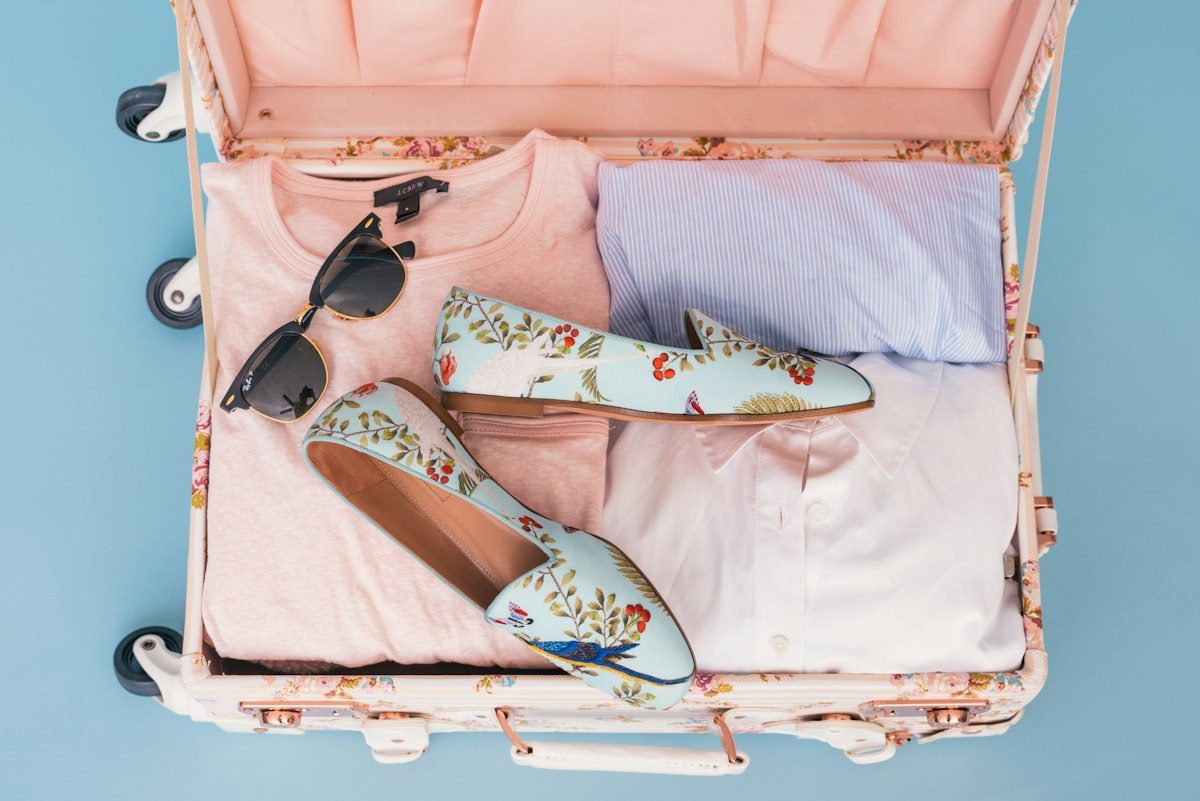
The suitcase photograph illustrates a packed group, not a universal luggage method or evidence about current travel restrictions. Check the relevant journey information through appropriate sources where it affects the real arrangement.
Keep the arrival group complete
Name the suitable clothes and shoes needed for that specific stage, including any appropriate layer. Distinguish pieces already worn from those that need retrieving. A list of individual garments is less useful when it does not show how the actual arrival outfit comes together.
Our complete outfit packing guide keeps that relationship central. The first unpacked group should serve one real activity instead of becoming a miniature wardrobe for every imagined possibility.
Follow the products and luggage requirements
Arrange the actual clothing and luggage through their relevant information. Do not assume every garment can be folded or compressed in the same way because a tidy packing photograph shows it. Keep product identity and care needs clear where several pieces look similar.
If a practical packing question remains unresolved, seek the relevant guidance rather than improvising an arrangement that merely looks compact. The arrival outfit should remain suitable to use, not just easy to photograph inside the bag.
Give the other plans their own roles
Separate the first arrival activity from a later evening occasion or another planned stage. Some retained pieces may appropriately serve both, but that connection should be explicit. Avoid packing another complete group automatically when one suitable shared item already meets the actual need.
The one evening outfit guide gives the later event a bounded clothing decision. That clarity leaves the arrival group focused instead of collecting every possible layer or accessory.
Make the destination return understandable
At the destination, follow the actual garments' storage and care requirements and keep ready pieces distinct from those needing attention. An outfit that leaves the bag should have an appropriate destination rather than spreading into an unidentified pile. Keep private belongings handled responsibly through the real setting.
What if the arrival plan changes? Reconsider the suitable group through current information instead of treating the original packing order as a commitment. What if a required item is unclear? Resolve the actual outfit question before adding more alternatives. A considered first-unpack choice connects the packed clothes to real use at the destination.
Keep a concise note of the specific arrival group for a recurring journey type. The context explains why those pieces were chosen and prevents a previous trip's arrangement from becoming an assumed rule for another destination.
A question or correction? Contact the editorial desk.