Some links on this site are affiliate links. If you buy through a marked affiliate link, we may earn a commission at no additional cost to you. This guide is researched editorial advice; purchases should be checked against current retailer terms. Read our disclosure.
Define what the row is for
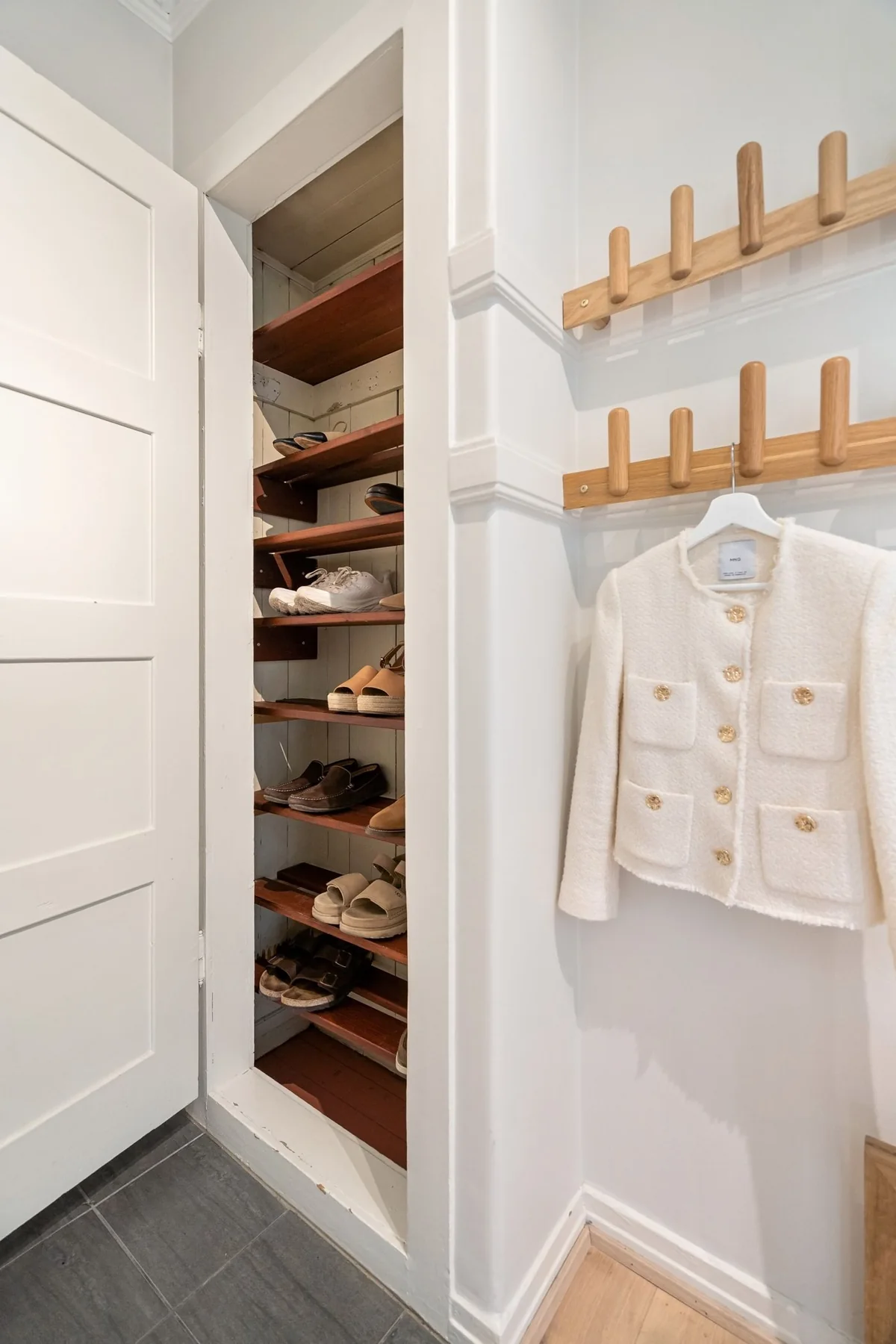
A wardrobe shoe row is easier to use when it has one clear role: the suitable pairs currently in ordinary rotation. Begin with the shoes that belong to the actual week rather than every pair owned. Keep product care, storage and any individual footwear requirements central.
This is an organisation exercise rather than footwear advice for a particular condition. A neatly displayed pair is not automatically ready or appropriate for the person merely because it has a place on the shelf.
Separate readiness from appearance
Check which pairs have completed their actual care stages and which need attention through their own guidance. Give unresolved items a clear next action rather than mixing them into the ready row. Do not use a tidy shelf to conceal an unanswered condition or repair question.
Our shoes and real plans guide begins with ordinary activities. Keep that connection visible so the row represents the current week instead of a general collection arranged only by colour.
Use the available space honestly
Compare the actual shelf dimensions with the complete pairs and follow the furniture's requirements. Include projecting heels or other features in the arrangement. A photograph of narrow shoes does not verify that another pair can use the same footprint.
Avoid forcing an unsuitable stacking arrangement to preserve a symmetrical display. If the current group does not fit appropriately, reconsider its size or destination. A smaller clear row may serve mornings better than a full shelf that must be emptied to reach the needed pair.
Make the return understandable
Choose an arrangement another household user can understand where the space is shared. Keep pairs identifiable and agree the relevant return rather than relying on a private colour order. A simple description of each shelf's role can be more useful than a detailed diagram.
The next-action care guide covers clothing, but its distinction between ready and awaiting attention also helps keep the shoe row honest. The actual footwear instructions still determine the relevant care.
Review it when the week changes
Reconsider the group when activities or conditions change. A pair kept for a specific occasion may have a suitable separate home rather than occupying the everyday row indefinitely. Preserve its actual storage requirements and avoid turning an ordinary rotation into a disposal decision.
What if the row repeatedly overflows? Identify whether the current group is too broad or the shelf has another competing role. What if one pair is never chosen? Ask whether it still fits the intended plans before assuming another purchase is needed. A considered shoe row keeps the current suitable choices legible and gives unfinished care an explicit next step.
Record an unresolved product question with the correct pair's identity. Two visually similar shoes can require different care, so a general note beside the shelf may not be sufficiently clear.
A question or correction? Contact the editorial desk.